Trump's Venezuela Oil Deal
Transcript
Machine-transcribed by YouTube. Expect errors in names, commands and version numbers.
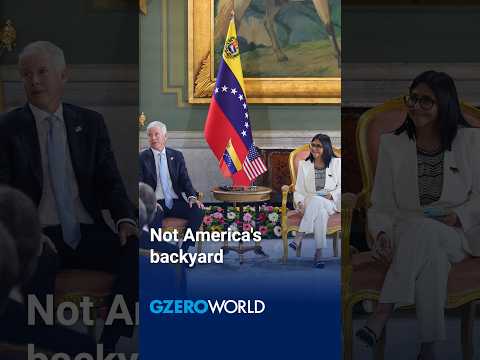
On August 28th, US President Donald Trump announced what he described as the largest oil deal in history, where the United States would take a majority stake in some 65 billion barrels of Venezuelan crude reserves. Fundamentally, what this deal is about is projecting stability. Thus far, uh, the oil majors that Trump thought would be sort of rushing to break down the door to re-enter Venezuela have been pretty reticent, owing largely to political instability and a host of other risks associated uh, with Venezuela at the time. So, by taking a active government stake in one Venezuelan uh oil producer, what the Trump administration is basically trying to signal is that it's going to be standing shoulder-to-shoulder with the private sector if and when they choose to invest in Venezuelan oil production.
That's all well and good in theory, but in practice, an opaque deal negotiated with shady figures tied to the Venezuelan regime and under conditions of dubious legality could just as well frighten away private capital as it will catalyze it. In the aftermath of Operation Absolute Resolve, Karakas has been far more willing to basically bend over backwards to accommodate US desires in no small part because they're also the Rodriguez government's desires. The Venezuelan regime has a vested interest in being able to restore oil production, to ramp it up, to sell more, and actually, you know, to get more revenues. And Delio herself has said that the Venezuelan government may receive as much as $200 billion in royalties. Now, there's one actor that's been much more skeptical of this deal, and that is, of course, the Venezuelan opposition and the diaspora. The general response within Venezuela and especially among the diaspora has been largely negative. Many people are seeing this as further proof that the United States is prioritizing extractivism over a democratic transition in Venezuela.
Basically, the deal that has been struck uh within Venezuela has been we're going to see how the uh economic recovery and
stabilization plays out. See how uh the reactivation of the oil sector may benefit the lives of ordinary Venezuelans. But right now, as we're coming on the heels of a devastating earthquake that's displaced [music] tens of thousands, killed thousands, and seeing limited or laggered progress towards democratization, the pressure is mounting for something to happen and for real change to come in Venezuela.