US Navy conducts FIRST-EVER drone boat strike against IRAN
Transcript
Machine-transcribed by YouTube. Expect errors in names, commands and version numbers.
For the first time in history, the US Navy just used armed drone boats to strike Iranian targets. And the company that built those drone boats is actually part of a huge culture shift that's going on right now within the secret of confines [music] of America's defense manufacturing base. And maybe even more importantly, this strike means that America's quickly growing maritime drone fleets have now officially made the leap from serving in the intelligence and support roles they already have for years to full-on kinetic combat ops, making
the US one of only a handful of nations on the planet to demonstrate this capability thus far. So, let's talk about these drone boats that are saving Apache crews and blowing up Iranian subs in the Middle East, but also how their manufacturer is setting itself apart in the minds of lawmakers back here at home. I'm Alex Hollings, and this is a ShortFuse edition of Firepower.
>> [music]
>> Now, the firm behind the US Navy's new drone boats that were used to strike Iran this weekend, Texas-based Saronic Technologies, is part of a much broader shift toward defense contractors that are more focused on delivering real war-fighting capability instead of just looking for contract loopholes and big payouts. At least, that's according to what the ranking member of the House Armed Services Committee, Representative Adam Smith, told us in a recent interview. And this weekend's strikes against Iran seemed to demonstrate that value proposition. But, before we talk about how Congress feels about Saronic, let's run down what we know about this weekend's strike. Now, on Sunday, the United States Central Command, or CENTCOM, launched three naval one-way attack drones against Iranian targets.
And we now know those drones were Sironic Corsairs. According to CENTCOM's statement, those explosive-packed Corsairs were used to strike the Bandar Abbas naval base in southern Iran, which is considered the primary installation of the Iranian Navy and the Islamic Revolutionary Guard Corps' naval forces. Now, this base is of significant strategic importance for a whole laundry list of reasons. It's a naval command and control site. It's a staging point for naval mines and fast attack boats. It's the home of the Iranian Navy submarine fabrication and maintenance facilities. And it's an assembly hub and test site for a long list of Chinese-sourced cruise missiles like the surface-to-surface HY-2 Seersucker and the anti-ship weapon the YJ-8. But one might argue that what really makes Bandar Abbas most valuable is its location, smack-dab in the middle of the Strait of Hormuz, making it sort of a center of gravity for Iran's efforts to militarize the strait and maintain control over all commercial shipping that passes through it. Now, this installation is said to be heavily protected by the Islamic Revolutionary Guard Corps, thanks to a combination of dated American and Soviet-sourced surface-to-air missile systems to defend against attacks from the air and both Soviet-sourced Sunburn and Chinese-sourced Silkworm anti-ship missiles that are positioned in hardened underground silos to defend it against attacks from the sea. Of course, all of that stuff means that this site has also been the target of several air strikes in recent months. So, it isn't exactly clear what level of defense the base might still be able to muster, but logic dictates that rebuilding its defenses has been a focal point for Iranian forces all throughout the ceasefire.
Now, the strike, it seems, may have specifically targeted Iran's submarine maintenance and repair facilities. And it hasn't been confirmed by Pentagon officials yet, but the submarine that they hit, at least looks to me to be a Ghadir-class [ __ ] sub, which is a shallow-water diesel-electric sub based on a North Korean design that entered service for the Iranian Navy as recently as 2007. Now, the Iranian Navy is said to have had as many as maybe 20 of these small subs at the onset of Epic Fury, though we know at least one was sunk by American forces during those combat operations because footage was released of it, and it isn't clear how many more Iran may realistically have. Now, CENTCOM rightfully states that this attack marked the first time ever American forces have employed maritime drones for combat operations, but it's pretty important to note that this is not the first time America's naval drones, and in fact, the Corsair in particular, has demonstrated its value in the fight. Now, these same Corsair drones were used back on June 8th of this year to rescue the crew of a downed US Army AH-64 Apache attack helicopter
not far from the Strait of Hormuz, only a few months after very quietly entering service for the US Navy. And the relative secrecy surrounding Saronic's recent push to the tippy-top of the US Navy's tasking list probably feels like pretty familiar territory for the company's co-founder, Dino Mavroukas, who served in eight combat tours over 11 years as a member of the US Navy SEALs.
At 24 ft long, the Corsair is about the size of a pretty big speedboat, and it They carry payloads of up to 1,000 lb to ranges of over 1,150 mi at speeds of up to 35 kn or about 40
mph. Now, the Navy hasn't disclosed how many of these drones it's already got in service, but we do know that they entered service with the US Navy's Task Force 59 and its operational counterpart Task Group 59.1 in March of this year. Not too long after Saronic received a $392 million contract from the Navy for an undisclosed number of drone platforms in August of last year. Now, all that range, speed, and payload all make the Corsair a very capable intelligence, surveillance, and reconnaissance platform. But, it also makes these attritable or semi-disposable drone boats extremely potent one-way attack drones. If you maximized its payload with explosives, that would give a single Corsair comparable explosive power to as many as 50 AGM-114 Hellfire
missiles. Now, according to Saronic, the Corsair platform has already logged over 100,000
nautical miles. That's over 115,000 non-pirate miles in testing so far, which would be nearly enough to circle the entire planet five times over. The platforms can operate entirely autonomously or as a part of a larger collaborative swarm or they can be operated via remote control. And they have a human in the loop via a two-way data link to make some decisions, like whether or not to employ munitions when they're armed. Now, we actually spoke to Representative Adam Smith, the ranking member of the House Armed Services Committee, about defense appropriations not all that long ago. And he actually brought Saronic up long before they ever grew to fame for saving Apache crews as an example of how the Pentagon and defense contractors are both working toward a positive shift in contracting culture that sees companies take on increased financial responsibility for the success of their products, but more importantly, the success of the programs that those products are a part of.
>> I thought it was really interesting when I was talking with Deputy Secretary of Defense Feinberg a few weeks ago before I went down to Saronic. I asked him about Saronic. Initially, his take was, you know, when he said, "Look, you got all these newfangled defense contractors come in. They show you these big charts and these computer graphics and these simulations and they all act like they're going to do all this incredible stuff and then you see the real product." And he said it was kind of, you know, it was kind of lacking. But then the interesting thing was Saronic fixed it. On their own dime, okay?
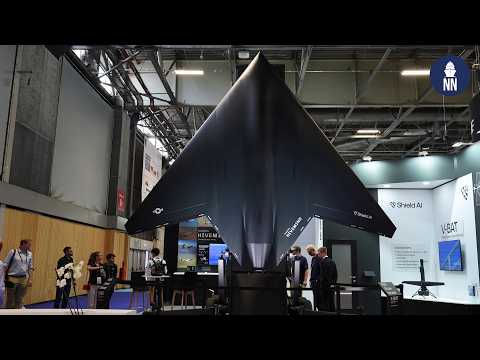
Basically, Feinberg said, "This isn't what" And they said, "You know what? You're right." They went in, they did it. They didn't come back and say, "Okay, well, now we've got a contract with you, so we can keep giving you this thing that you've just told us that it that you don't want or you can pay us another, I don't know, $2 billion to build something new." No, we built a culture and I said, "No, that's on us. We're going to go spend the money and fix it." You've got, you know, Shield AI built their own collaborative combat aircraft without a contract. SpaceX built those rockets without a contract. So, you now have created a culture where now it's not a matter of how do you figure out how to bilk the defense uh sorry, the the the the taxpayer. You want to produce a product. And let me just say that I don't blame the defense contractors, the major defense contractors. They adapted to the world that we created. Now you're seeing that Lockheed, Raytheon,
I always get the initials. They've changed their name to Boeing, a bunch of others. >> [clears throat] >> They can compete. Uh the joke I always say is like it's not that, you know, large defense contractors can't compete, it's just that they'd rather not compete. All right? If you want to just give me the contract, I'll take it. But, now that we've changed that culture, you're seeing not just the small innovative companies like, I don't know, Saronic and Palantir back in the day and Anduril and gosh, there's a whole bunch of others innovating. You're seeing the large firms innovate. It's large firms that are doing the B-21.
Okay, so if you change that culture, you can get a much better result and more value for the taxpayer. >> Of course, having a good platform doesn't really help you win a fight unless you can build enough of them to matter. And as I said, we don't really know how many Corsairs the Navy's got in service, but we do know that the company announced the production of their 300th boat in May of this year, and things are only speeding up from there. In December of last year, Saronic reported having the production capacity to build between 400 and 500 Corsairs per year at their
Austin facility, which put them at a similar production optempo to other Navy drone producers like Black Sea Technologies with their slightly smaller Guard boats that are also being delivered to the US Navy as we speak. But by March of this year, Saronic Technologies had already announced that that production number had risen to 1,000 a year with their new production target of being able to pump out 2,000 a year in the not-too-distant future. And that means Saronic is already capable of pumping out nearly three completed Corsairs for the Navy per day, every day, with plans already in place to double that thanks to the acquisition of a new production facility in Franklin, Louisiana. And while the drone boat operations conducted by the US Navy are really only garnering a lot of media attention when something really remarkable happens like, say, the first US Navy maritime drone strike in history this weekend, the real value of these operations really extends way beyond America's current I mean, let's call it a strategic quagmire with Iran. Developing and testing maritime drones, like so many other military technologies, can only take you so far, but real operational testing in an actual combat environment offers a treasure trove of performance data to pour over and analyze.
In other words, if the US ever found itself in a large-scale fight against a near peer, having actual combat data to pull from when iterating on drone designs and tactics, not to mention the confidence within personnel derived from successfully employing these systems in past conflicts, well, that can all pay significant dividends. Now, Saronic, it's also worth noting, has a number of other drone vessels in development and testing as we speak, including the much larger 180-ft Marauder that is slated to demonstrate its ability to launch Castilian's Black Beard hypersonic missiles next year. Now, the Marauder offers an unrefueled range of more than 6,200 mi carrying a 25-ton payload at speeds
as high as 25 kn or just a bit shy of 30 mph. Now, the deck of the Marauder is designed to accommodate up to 40 20-ft ISO containers, just like the ones housing new weaponized systems being developed and fielded by the US military to launch everything from drone interceptors to cruise missiles to one-way attack drones. Using ISO containerized systems, like Anduril's new Barracuda 500M containerized launcher, a single Marauder could potentially carry up to 128 long-range cruise missiles to supplement a carrier strike group's kinetic firepower, with each missile capable of delivering a 100-lb warhead to targets more than 575 mi away. Now, the Barracuda 500M carries
a much smaller warhead than the Tomahawk that's most commonly employed by Navy surface ships and it only offers about half the range, but that sort of volume of fire has a great deal of value in itself. With a 100-lb payload, the Barracuda 500M offers roughly five times the explosive power of a Hellfire and a single unmanned Marauder carrying four of those launch systems could strike more individual targets than even America's largest surface combatants, its few remaining Ticonderoga-class cruisers. Now, of course, the kinds of targets you'd strike with those Barracudas would certainly be different than the kinds you'd strike with much larger Tomahawks, but under 200 grand a piece, the Barracuda could also help to saturate enemy air defenses to maximize the chances of mission success for Tomahawks and similar higher-priced munitions.
Now, the announcement of the Apache crew being rescued in June was the first that a lot of folks ever learned of the Corsair or of the US Navy's pretty expensive drone fleets that already include growing but tough to nail down numbers of Corsairs, smaller speedboats called GARCs or global autonomous reconnaissance craft, Mantis T-12 surveillance vessels, 38-ft T-38 Devil Ray speedboats, extreme duration Saildrone Explorers and a whole bunch more. In fact, we covered these secretive programs and their rapid expansion in depth in a recent video that I recommend you go check out if you're into that sort of thing. And that's going to do it for this short-fused edition of Firepower from Sandbox News. Make sure to download the Sandbox News app right now. It's available for iOS and Android devices, and I saw your comments about not being able to find it on Android. So, rest assured, there will be a link directly to find it in the Google Play Store below this video in the description. You can also find it by looking for the Sandbox app in the Google Play Store and then clicking on the Sandbox News app off of it. I'm not sure why it's not showing up in searches, but there is a link in the description below. Now, if you got anything out of this video, make sure to click like and subscribe down below and leave me a comment so I know what I should cover next. And of course, don't forget to tap on that bell icon so you never miss a drop from Sandbox News.