Has Russia Finally Run Out of Tanks? Analysis of 4+ Years of Russian Tank Storage
Transcript
Machine-transcribed by YouTube. Expect errors in names, commands and version numbers.
[music]
>> Russia and the Soviet Union before it has always commanded a massive arsenal of tanks and other armored vehicles. They simply dwarfed any other country. In 1980, the Soviets had approximately 55,000 tanks total, and US intelligence were predicting that they would surpass 90,000 by the year 2000. As we know though, that never happened. The Soviet Union collapsed. Many of those tanks suddenly became property of newly created nations like Ukraine, Kazakhstan, Belarus, and so on. Despite that, in the early 90s Russia alone was left with more than two to three times the number of tanks of the second largest tank fleet, the US. They had so many tanks they didn't know what to do with them and little to no budget to store, maintain, or even scrap them.
It's crazy to think that having so many tanks would be such a problem. By 2012, they had about 20,000 and began plans to cut it down to 10,000. 2,000 of those would be in active service, another 2,000 for training that could be used in the event of a war, and 6,000 in storage. Which brings us to the war in Ukraine. At the beginning in February 2022, Russia had approximately 3,000 active tanks with another 7,200 that we identified in storage and likely a few hundred more that were not visible parked inside of garages. As the war went on, those numbers in storage plummeted and quickly. Today, there's just around 2,000 remaining in storage and even most of those have decayed so much after the decades of neglect that they'll never be usable again. So, with Russia having blown through their stocks, conducting fewer and fewer armored attacks in Ukraine, and the stalled progress in Ukraine, are these signs that Russia has finally, in effect, run out of tanks? After years of tracking and monitoring these storage bases, Javelin I think we've finally come up with an interesting final conclusion. But first, real quick, our sponsor, Black Forest. While we find out more things about Russian tank storage, one thing I just found out was something wild about stem cells. If you don't know, stem cells are the tiny repair crews in your body that go fix things that need to be fixed. And guess who's been ahead of the curve? Joe Rogan. He's been talking about this for years. Just watch.
>> I had a full-length rotator cuff tear. And the UFC gave me a doctor in Los Angeles, and he looks at my MRI and just you're going to need surgery. You got to go 100%. He goes, "I don't know how you're using it now. It's a matter of time. You're going to need surgery, so might be better to do it now." So, I got it shot up with stem cells. And this was the early days of stem cells in America where you could get away with more. Now, you got to go to Mexico now, I guess. >> But, here's the crazy part. Most stem cell therapies are illegal in the US.
But, here's what most people don't know. There's actually a natural way to support your own stem cell activity. And it comes from high flavanol cocoa. And Harvard scientist Dr. William Li actually backs this up. Check it out. >> The flavanols in cocoa So, studies have been done to show that the flavanols in cocoa stimulate stem cells to come out of your bone marrow like bees in a beehive in your bloodstream, and they go out and they find wherever needs to be repaired. If it's in your heart, they'll fix it. >> That's right, dark chocolate. But, here's the thing. Flavanols are the good stuff found in cocoa beans, but they're usually destroyed in the chocolate making process. And that's where Blackforest supplements come in. They've created the first ever high flavanol cocoa powder packed with everything your body actually needs. And it's only 20 calories. I mix it in with my coffee or a protein shake, and it tastes amazing.
If you feel old, slow, or just off, lazy stem cells might be why. But, this it flips a switch. Over 100% increase in stem cell circulation. And right now, Blackforest is having one of their biggest sales yet for 4th of July. For the next 48 hours only, they have a buy one get one across the entire store. Plus, you'll get a free bottle of NMN with every order. Hit the link in the description or the pinned comment. Grab the deal while it lasts. Take control of your health before someone else does for you. Again, Black Forest. One quick correction I want to make sure to mention is an error I had in my last video on Ukrainian storage numbers. I had mixed up saying that the numbers were what Ukraine currently had in storage when I meant to say according to the latest possible satellite imagery.
And with Ukraine, that's a big difference being that there are very few updates in imagery. Some could be pretty new while others could be 4 or 5 years old. Jompy, who's put a ton of work into this video as well as the numbers for that one, had it right. I just misspoke. So, back to Russia. While Russia's tank reserves are effectively depleted, they are not out of tanks. Besides tanks in storage, Russia obviously has tanks in active service. And those total numbers are currently estimated to be even higher than at the beginning of the war, about 3,000 compared to 3,500 now. The
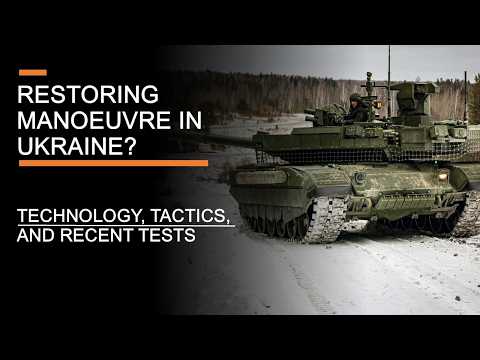
difference is today it's a weird mix of some higher-end modern tanks like the T-90Ms, the latest T-72B3s, and so on,
but also a huge number of old, low-tech, hardly upgraded or modernized tanks like the T-55 and T-62. And these older tanks seem to be the only ones used more and more often. I mean, the T-62 was a great tank for its day, some 50 years ago, but now its armor is hopelessly outdated. It was built before composite armor became standard, which makes them much more vulnerable and destroyed or disabled after even just a few FPV drone hits. In fact, we're barely even seeing the modernized version anymore, the T-62M. It's just pretty much these old, practically naked tanks. But, that does match what we've been seeing diminishing in storage. The old Soviet-era tanks have been quickly approaching extinction. Things like the T-55, T-62, T-72, and T-80 numbers, all of which are no longer being built, have rapidly dwindled. In fact, we expect to see the T-80 reach zero in storage this year.
One major misconception we've seen repeated over and over again is that one less tank in storage means that it's replacing one destroyed in combat. That is not true. One reason we saw a massive decline in storage numbers early in the war was due to Russia's mobilization. In late 2022, Russia's mobilization saw the creation of some 70 new regiments and all the equipment and vehicles to go with them. Now, most of those were infantry, but motor rifle regiments typically have about 40 tanks each, while tank regiments close to 100. So, many hundreds upon hundreds of tanks alone were removed from storage just for that. And between 2022 and 2023 is where we see the biggest drop in storage numbers. More than 2,000 disappeared.
Compare that to every other year, we saw a decline of just around 1,000 or less. What this means is Russia is basically just pulling tanks from storage as fast as they can repair them and get them ready. And that brings up another vital aspect of Russian tank and other armored vehicle numbers. And that is where they go between being in storage to active use on the battlefield. And that is their tank repair factories. The tanks in storage, even their best ones, need work done on them before they're ready for combat. They are removed from storage, put on trains, and taken to what are called BTRZs. In English, that basically means tank repair plants. And trying to follow the numbers here get a little crazy, and that's cuz they fluctuate like crazy. They ship in tanks from storage and we see huge backlogs of vehicles sitting parked outside these plants. They work through that batch and the numbers decline until they're ready for new shipments from storage. There's also large numbers of tanks sitting outside that have never moved in years.
And these are likely being kept around to cannibalize for any spare parts they might need to fix up other ones. But, at any given time, we typically see around 1,000 tanks or more spread across these sites. And as I mentioned earlier, the T-80s are likely to hit zero before the end of this year in storage, having gone from nearly 1,700 in 2021 to just 26
remaining. There are still a huge backlog of a few hundred of these at tank repair plants, as well as another 600 or so in active service. So, we haven't seen the end of them just yet, and we might not for some time to come. And that's due to a major decline in Russian armored attacks. Tanks are being used less and less on the battlefield. One way of reading that might be due to Russia running out of them, but the real answer is they're just not anywhere near as survivable in combat as they once were before the widespread use of FPV drones. These tanks are huge, easily visible targets that are spotted by recon drones well before they can reach the front lines. And FPV drones quickly sent in to attack. So, obviously, Russia has moved away from large mechanized attacks to infantry attacks, which themselves often just turn into meat grinders as well. Russia used to lose several tanks every single day in the early part of the war. Lately, it's down to just about a dozen or so a month. In fact, Russia is using so few tanks in Ukraine lately that they're able to send them elsewhere, for example, in Mali.
This is also likely why we're not seeing Russia committing their newer, most advanced tanks and vehicles like the T-90M. Instead, it seems as if they're keeping them back and building up their tank fleet with these better tanks until a better solution could be found to the threat that FPV drones present. We've all seen these pretty crazy-looking improvised attempts to protect tanks from these, often called turtle tanks. And they have helped tanks survive. Michael Kaufman estimates it takes around 30 to 40 FPV drones to destroy a single tank. However, just look at these. The downsides of this improvised armor is obvious. Seriously limiting visibility for its crew, all that extra weight limits mobility, the massive size making them even easier to spot, limited turret movement and aiming, and a lot more. And this isn't just a problem for Russia. NATO, too, just announced a huge $40 billion investment into finding ways to counter drones. Now, as the FPV threat becomes better understood and new technologies and tactics are developed to counter FPVs and other drones, it seems likely that tanks will yet again become relevant. And this seems to be what Russia is banking on. For now, they seem to be holding back their newest, most advanced tanks and continuing to build new ones until that day comes. So, has Russia run out of tanks? Old Soviet ones? They're almost there. But tanks in general? No. In fact, they're nearly reaching a break-even point with the production of new tanks if the current rate of lost ones continues. Every year, Russia builds roughly 200 to 250 new tanks. And these are the latest T-90 M's. However, the number of tanks in storage is nearly at its end. It'll be interesting to see just what they do with all these huge, now virtually empty storage bases that they no longer have a need for. Likely just be abandoned like many before it from the early '90s and 2000s when they quickly got rid of tens of thousands of tanks. But in the meantime, Russia is moving to develop a more modern and capable active tank fleet moving beyond its Soviet inheritance.