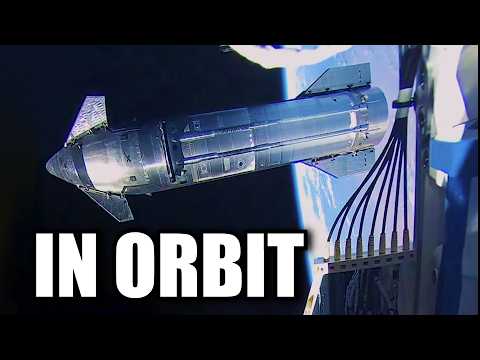
NASA Astronaut Chris Williams Soyuz MS-28 Undocking
Transcript
>> You're looking live there on the right of your screen at the Soyuz Ms. 28 spacecraft attached to the Rassvet module on the earth facing side of the Russian segment of the International Space Station. On board that spacecraft are three crew members of the expedition 74 crew, NASA's Chris Williams and Roscosmos cosmonaut Sergey Kud-sverchkov and Sergey Mikheyev. They are suited up and ready to undock from the space station in about 32 minutes from now to begin the ride home. In the completion of their 241 day mission. Good morning from
Mission Control Houston in e International Space Station Flight Control Room at NASA's Johnson Space Center. I'm Ken Apel with NASA communications.
Teams across the world are working in tandem and ready for the departure of Williams, Kazakov and Mikheyev from the International Space Station at 2:03 a.m. central, 3:03 a.m. eastern. When the Soyuz lands
on the step of Kazakhstan, it will be 5:25 a.m. central Time here in Houston this morning and 3:25 p.m. in the afternoon at the landing site there in Kazakhstan. All Soyuz systems
are reported to be in great shape. With vestibule leak checks complete, the crew is suited up in their Sokol launch and entry suits, with leak checks nominal on those, and the Rassvet hooks are open. We
are just under 30 minutes until the undock command is issued.
Rosaviatsia Search and Recovery forces with NASA personnel support embedded are enroute to the interim staging site of Zhezkazgan, which is 91 miles to the northwest of the landing site itself.
>> Where you will see. Six home
users and.
>> Here's a look at the Russian flight control team in the Russian Mission Control Center in Kurilov, outside of Moscow. This team is serving as the primary control working. Today's undocking, entry and landing operations of the Soyuz vehicle. >> There is no frame time, right. >> Yes.
>> And currently here in Houston in the International Space Station flight control room is the orbit one team of flight controllers being led by Flight director Anthony Varela.
His role today is to lead and work closely with his team of flight controllers on the ground, as they work in tandem with that team of Russian flight controllers. We just showed you half a world away. Mission Control Houston operates 24 over seven, 365 days a year, with three shifts per day known as orbits. And again, this is the orbit one team of flight controllers. And part of that team is today's Capcom or capsule communicator. As you just saw to Anthony Arias, right, is NASA astronaut Anne McClain. She returned from
the International Space Station just two weeks shy of a year ago after spending 148 days as part of expedition 72 and 73.
Her role today as Capcom serves as the primary communication between mission control and the crew on board station. You may hear McClain's voice during today's operation, communicating with the crew currently aboard station.
We are currently just about 27 minutes away from the issuance of the undocking command, and this command opens up the hooks holding the Soyuz Ms. 20 spacecraft to the Rassvet module. It is currently docked to. A
minute and a half. After that undocking command is issued, the hooks will open and springs on both side of the docking interface will push off against one another. One another, beginning the spacecraft's journey home, carrying three crew members back to earth. After nearly eight months.
Williams, Kud-sverchkov and McKay have climbed aboard their Soyuz spacecraft a few hours ago, where they donned their Sokol launch and entry suits and conducted leak checks on their side of the Soyuz docking interface. Let's take a look at the replay of the hatch closure that separated the departing trio of Williams, Kud-sverchkov and Mikheyev from the rest of the station crew. About three
hours ago, the departing trio said their farewells to the seven remaining crew members aboard the International Space Station. Shortly after the final hugs and handshakes were exchanged, the three crew members floated inside the Soyuz. The hatch
then closed on the Soviet side, followed by the closing of the Soyuz hatch at 10:45 p.m. Central 11:45 p.m. eastern. You
see here on the screen the replay of a wipe down being done on the circumference of the hatchway from Soviet to the Soyuz, making sure no foreign object debris was present before the hatch was closed. This is to provide a clean interface for the leak checks that occurred between about two and a half three hours ago. Those leaks, those leak checks resulted in an airtight seal between the two vehicles. The
vestibule is depressurized, setting the stage for the undocking of Soyuz from Rassvet coming up here within minutes.
An update on the search and recovery forces with NASA personnel support embedded, they have arrived to the interim staging site of Jezkazgan, which is 91 miles to the northwest of the actual landing site its.
The command to begin the initiation of the opening of the hooks on the Soyuz side is now just 24 minutes away. A
mission of 3856 orbits more than 102 million statute miles. NASA's Chris Williams and Roscosmos cosmonauts Sergey Kud-sverchkov and Sergey Mikheyev are wrapping up 241 days in space. The flight
marked the first mission for NASA astronaut Chris Williams and Roscosmos cosmonaut Sergei Mikheyev. And this was Sergey
Kud-sverchkov second long duration spaceflight. Now, wrapping up this 241 day mission, bringing his total accumulated time and space to
426 days. The crew, which
launched and arrived at the space station on November 27th last year, has seen the arrival of six visiting vehicles and the departure of eight, and between this trio they supported three spacewalks during their nearly eight month mission aboard the station. When
Soyuz lands later today on the step of Kazakhstan, it will be 5:25 a.m. central here in Houston this morning and 3:25 p.m. in the afternoon at the landing site there in Kazakhstan.
This view shows a pair of Soyuz vehicles and on the right is miss. 28 were Williams. Kud-sverchkov and Mikheyev are located. And to the
left docked to the module on the Russian segment of the station is the newly arrived Soyuz Ms. 29 spacecraft that brought NASA astronaut and Neil Menon and Roscosmos cosmonauts Pyotr Dubrov and Anna Kikina to the space station. Last week on July 14th.
Among all the technical and hardware preparation for today's departure, one important item on the checklist was handing over command. Yesterday, Sergey Kud-sverchkov, who has served as commander of the orbiting laboratory since taking over from NASA astronaut Mike Fincke in January, transferred command to NASA astronaut Jessica Meir. Here's a replay of that change of command ceremony.
>> Well, it's been a wonderl eight months on board the International Space Station. And they were not easy. They were not way too difficult. But we had we definitely had a lot of experience that I, I, I'm
sure is very important for further space exploration. So many cargo vehicles, dockings,
payloads, signs, EVAs are
behind. And I would deeply
appreciate the help and participation of all, all
corporation, all partners around the world in Europe, Japan, United States and Russia.
And. But I think the most important thing is that we have
been working as a as a family, as a team. And I want to thank
the crew of expedition 74, including crew 11 and, of
course, crewmates that are now
here on board the station. And yeah, it the successful mission
couldn't be possible without support, knowledge, dedication,
and I will. I want to thank
everyone in this in this module
for for for this mission. So
with these words, I want to pass the commanding of the station to my colleague. And
really good person, Jessica Meir.
>> Thank you so much, Sergey, for your steadfast leadership during this part of expedition 74. You have definitely set a tone that united everyone on board, not only as colleagues, but as friends on a shared adventure. Accepting this symbolic key is a profound honor, and it means even more to me that it is coming from you.
[LAUGHTER] [APPLAUSE] [MUSIC] [MUSIC] When we look down at Mother Earth, we see our shared home. But when we look around this station, we see the real engine behind that view. Our team, we astronauts, get to be up here every day, but every moment of each day. We are keenly aware that we are only here because thousands of people in control centers, backrooms, or at their desks around the globe are waking up every day to set the scene for us to the rest of our exceptional team who is on the ground, including, of course, our beloved families. Thank you for keeping us safe, keeping us moving, and keeping us connected. This mission is ours as much as this mission is yours as much as it is ours. To me, leadership in this extreme environment is about empowering this team. It is about ensuring every single person on this crew has the space, the tools, and the support to be at their absolute best. It means practicing what we call good expeditionary skills. Taking care of the station, taking care of each other, and stepping up as both a leader and a dedicated follower when the situation demands it. Our primary goal, without question, is to execute our mission safely, efficiently, and successfully. But science and station maintenance are only part of the legacy that we leave behind. My personal ultimate goal for all of us is that when our time here is done and we feel the pull of gravity once again, we don't just return as successful colleagues, but as even better friends than we are today. Looking around at Sergey, Sergey, and Chris as they prepare to depart, I am all smiles knowing that we have accomplished that goal thus far.
Thank you so much for your hard work and dedication to station, your stimulating conversations and camaraderie. And of course, your magnificent space cakes.
You will be missed. We are wishing you a wonderful journey back to planet earth. Ís.
>> Thank you so much. >> We will do our best to maintain the positive momentum that you imparted for those of us us remaining up here. Let's look out for one another. Keep laughing and continue pushing the boundaries of human discovery. Thank you and welcome to expedition 75. This mission belongs to all of us.
>> Oh.
>> Look to the camera.
>> This is Mission control, Houston. And if you're just joining us, we are covering the undocking of the Soyuz Ms. 28 spacecraft carrying NASA astronaut Chris Williams and Roscosmos cosmonaut Sergey Kud-sverchkov and Sergey Mikheyev. We are about 14
minutes away until the undocking command is issued.
Also, use systems are nominal and all teams across the world have pulled go for undocking.
Here's a look at the remaining seven crew members in this expedition 75 crew portrait. From lefto
right are NASA astronauts Jessica Meir and Neil Menon. Roscosmos cosmonauts Fyodor Dubasov Andrei and Anna Kikina. Next is Jack Hathaway of NASA and then Sophie Adorno of the European Space Agency. There on the right. NASA astronaut
Jessica Meir on the left, took over command of the station from Sergey Kud-sverchkov yesterday morning. The
actual demarcation point for the end of expedition 74 and the start of expedition 75 will come at the time of physical separation between the two vehicles here, just about 15 minutes from now.
At the time of undocking, the Soyuz will begin to push away from the International Space Station by means of two separation burns. Three minutes after physical separation. There will be a first of two separation burns. That's an eight second burn of the Soyuz engines followed a minute and 20s later by a 15 second separation two burn that will accelerate the Soyuz away from the International Space Station's Rassvet module. Then,
to preview what's ahead on the crew's journey home today, undocking in the separation burns are just the beginning. A bit later this morning, when Soyuz reaches a distance of 41km away from station, the spacecraft's deorbit burn will begin. This four minute and 42
second deorbit burn serves as a braking maneuver to slow Soyuz down, allowing it to drop out of orbit for entry into Earth's
atmosphere. >> Page 47.
>> After deorbit burn, pyrotechnics will separate the three sections of Soyuz, the crew and, of course, strapped into their seats in the descent module with the heat shield in the direction of travel to repel temperatures that will build up to about 2500°F. The
parachute deployment sequence comes with two pilot parachutes, a drogue chute followed by the main chute that will enable the Soyuz to slow down and descend to a landing, with a soft landing, engines firing just a moment before touchdown.
Landing is scheduled to take place on the step of Kazakhstan, 91 miles southeast of the town of Jezkazgan at 5:25 a.m. central this morning. And that's 3:25 p.m. in the afternoon at the landing site. >> M transmitter is on.
>> The display. >> Display, plus TV command arm command sent. We are.
We transitioned to the
approach display and there is a TV data on Beco. Okay,
copy. >> This view shows a pair of Soyuz vehicles and on the right is MS28, where Williams could. Chekhov and Mikheyev are located. And
there, on the left of the screen, docked to the module in the Russian segment of the station is the newly arrived Soyuz Ms. 29 spacecraft that brought NASA astronaut and Neil Menon and Roscosmos cosmonauts Pyotr Dubrov and Anna Kikina to the space station. Last week. On July 14th.
We are just about 2.5 minutes away from the issuance of the undocking command in the International Space Station is flying 260 miles over India.
>> And. Controllers and
monitoring. The switch to the
video streaming from the vehicle will start at hour 54
minutes. Okay, that's seven and
eight. Concur.
>> Copy. >> As we prepare for the issuance of the undocking command just about eight minutes from now, all preparations have gone very smoothly. Once the
undocking command occurs, a minute and a half later, the physical separation will take place, which is scheduled at 2:03 a.m. central, 3:03 a.m. eastern.
Three minutes later. This will be the first of two separation burns. An eight second burn of the Soyuz engines followed a minute and 20s later by a 15 second separation two burn that will accelerate the Soyuz away from the International Space Station's Rassvet module.
>> Three. >> Four three here's a good look at the Soyuz Ms. 20 spacecraft on your right that you see on the screen.
0919 at the top there is the instrumentation and propulsion module, the white section that also accommodates the solar arrays. >> One, one, two, one three illuminated. >> At the very bottom of your screen. That section of the orbiting module. And
in the middle, that's where the crew is strapped in the descent module with in the center seat. Sergey mikheyev to his right. >> You can turn on TV.
>> Sergey Mikheyev to his left and Chris Williams to his right.
>> An approach. >> A complete copy.
>> Infrared horizon center inhibits confirmed. The
mode is rotation. Shadow parameter is nominal. Copy.
Floodlight is on.
>> Here's a view from the crosshair and external engineering camera on the Soyuz spacecraft. >> On the left. >> In the lower left hand corner, you'll see two values. The upper of the two shows the distance between Soyuz and the International Space Station. >> At 0955. >> And at the bottom. That's the rate of closure. The relative speed so uses departing the space station.
>> Mode on both screens is
active. Waiting for the.
Sending our regards to the guys and we'll be waiting for them on the ground. >> Unintelligible.
>> Yes.
>> Arcade TV. >> We are just under five minutes away from the undocking command being issued. >> D two combined power not
illuminated and backup. CS16
sent. Not eliminated. Okay.
>> We are currently four minutes away from the issuance of the undocking command, and this command opens the hooks holding the Soyuz Ms. 28 spacecraft to the Rassvet module. It's currently docked to. A
minute and a half. After that, the undocking command is issued. The hooks will open. Springs on both sides
of the docking interface will push off against one another, beginning the spacecraft's journey home.
Also use systems reported to be in great shape, with vestibule leak checks complete, the suited up and their Sokol launch and entry suits with leak checks nominal on those hooks are open. We
are just three minutes away until the undock command is issued.
>> Purchase Moscow, VHF.
Inaudible. Copy. Loud and
clear. What is on one?
>> This is Mission Control. Houston. If you're just joining us, we are covering the undocking of the Soyuz Ms. 20 spacecraft carrying NASA astronaut Chris Williams and Roscosmos cosmonaut Sergey Kud-sverchkov and Sergey Mikheyev. And we are just
about two minutes until the undocking command is issued.
>> Before these seven command.
>> It will take 90s for the Soyuz hooks to open and physical separation to occur. We are a minute and
a half until the undocking command is issued. All
systems are go for undocking and the Russian flight control team is receiving data from the Soyuz vehicle.
>> 21. 20s. Ten.
>> 5321 one minute until undocking command on time. >> Command sent zero zero. I confirm the seven is illuminated for the internal transfer system s f the probe for SM is.
Retracted. Guess 17 executed mechanical connection and SS to s eight is not illuminated. >> We are under 30s away from the issuance of the undocking command. >> This 17 please make sure
that you issue the command at the time set copy. We're
standing by for 10s 10s
till we issue the command
54321. Sending the command.
>> Yes. >> The command has been issued and the Soyuz hooks are now driving open. >> Illuminated and. >> All systems on Soyuz and the International Space Station are a go as the process has begun for physical separation that will be occurring in just about a moment from now.
Hooks are continuing to drive, and we'll stand by for physical separation.
>> Capture is no longer illuminated. Ten 0235.
Separation is confirmed. Ten 0300. >> Undocking confirmed at 2:03 a.m. central. 3:03 a.m. eastern as Soyuz in the International Space Station flew 260 miles over northeast Mongolia. With
Soyuz Ms. 28 departure. We mark the close of expedition 74, and expedition 75 is officially underway. >> And verify that there are. There is no FOD. >> Back over to Soyuz. Williams and Mikheyev are on their first leg of their trip back home. >> System copy and we do not see anything off nominal.
>> We are seconds away from the first separation burn that will begin the. Accelerate the opening rate for the Soyuz from the station.
>> 07001. On T.V. Transfer to.
>> Once again, physical separation occurred at 2:03 a.m. central. 3:03 a.m. eastern.
>> Please report when Bev of MRM to close the.
Teamwork.
>> Here's a view from the crosshair at external engineering camera on the Soyuz spacecraft. Looking at the International Space Station.
We are just under one minute away from that first separation burn.
>> Thrusters for departure. Activation confirmed.
>> Confirmation that Soyuz thrusters are now activated in the first burn is underway. Confirming that first eight second burn is nominal and complete. >> Copy.
>> In the first of the two separation burns was completed. Nominally, the Soyuz is now in its departure orientation. The
roll maneuver is in progress.
>> The maneuver is complete. >> Go ahead.
>> Combined guests are confirmed. >> I put MRM one. Soyuz p V
valve to closed position. Copy. Thank you for the report. >> Soyuz is ready for second separation burn.
>> The thrusters. >> The second separation burn of 15 seconds in duration is currently underway.
The second separation burn completed in good. And with that, Soyuz begins its departure away from the space station. >> Sending the command. Ten
zero 750 is the time when the 17 command has been sent. Now
continue to page 50. Copy.
>> Control. >> The monitor on the left
display. Bus one one is not
eliminated. One two not eliminated. Repress of the thrusters is not illuminated. >> Yes. >> Dynamic mode. Inhibit. Confirmed. We are prepping 811.
Command. Command is ready. Send
the command. Command sent. The
Ka one thruster selection confirmed.
>> This is mission control. Houston, if you're just now joining us, we're covering the undocking of the Soyuz Ms. 20 spacecraft carrying NASA astronaut Chris Williams and Roscosmos cosmonauts Sergey Kud-sverchkov and Sergey Mikheyev. Undocking occurred at
2:03 a.m. central, 3:03 a.m. eastern. >> Dmitri AIT command has been prepped. The command sent.
Internal transfer system swap
is off. The 11 is also sent.
Probe retracted. We are ready
to send the command for the headlights. S 18 command has
been sent. The headlight is off.
Floodlight is off. >> You're hearing instructions through the interpreter being relayed to Sergey Kud-sverchkov, the Soyuz commander in the center seat of the Soyuz descent module. And to his left is Sergey Mikheyev and Chris Williams. On his. >> Right controller Orient. And
we sent the command and sent 1020. So we have rotational
hand controller Orient.
>> These are post docking procedures to place the Soyuz in position for its departure from station to its ultimate dish distance of 41km for the deorbit burn that's scheduled two hours and about 20 minutes from now.
>> Translational hand controller. Unintelligible.
>> Yes it is.
>> 496. And I am ready to
activate to deactivate the.
Video copy. Use the display and
deactivate the TV video. TV off
command is prepped. >> With the command. And sent. >> This is Mission Control Houston and once again, the Soyuz Ms. 20 spacecraft with NASA's Chris Williams and Roscosmos cosmonaut Sergei Kud-sverchkov and Sergey Mikheyev on board. >> Now continue working. >> They undocked from the orbiting laboratory at 2:03 a.m. central, 3:03 a.m. eastern. As the Soyuz in the International Space Station passed 260 miles over Mongolia. >> We'll talk to you then. Well, we'll talk to you at 1120, and we are going to page. 54 at
1124. >> Copy ops. >> Go ahead. And we have all the settings. >> We completed. >> In place already. Anton.
>> You can proceed with step 11. >> Tell me. >> Yes. Thank you. >> What did we decide to do with the comm? We have we decided to have. >> I understood that I can proceed with. Running post
completion. Correct?
>> It will have to be after the retrograde burn. Is between
1240 and 1255. That's when we're going to have our cone pass. And we'll talk to you on
the desk. So we'll stand by for
you to come back at 11, 20,
1120.
>> To expedite.
>> Guys, have a nice flight home and soft landing.
>> This is Mission Control, Houston and all that. All of the hatch closure pre undocking preparations and undocking went by the book. No issues are in work. And the Soyuz is now moving away from the station to its ultimate distance of 41km away from station, to set up for the deorbit burn that is scheduled two hours and 16 minutes from now. The deorbit burn scheduled at 4:31 a.m. central time. It will be four minutes and 42 seconds. This
retrograde braking maneuver to slow the Soyuz down by 128m/s
will allow it to drop out of orbit for descent back to earth.
And Kazakhstan. The members of the search and recovery team have arrived to the interim staging site, which is 91 miles to the northwest of the landing site itself.
This is Mission Control Houston. The Soyuz Ms.
28 spacecraft will soon pass out of visual range of the external cameras you see here on the International Space Station. And as we just saw,
the entry process begins with the undocking of Soyuz that
occurred a short time ago at 2:03 a.m. central, 3:03 a.m. eastern. The Soyuz is backing
away to a distance of about 41km away from space Station for its deorbit burn. The
deorbit burn is a four minute, 42 second retrograde braking maneuver to slow the Soyuz down and allow it to drop out of Earth's orbit. Pyrotechnics
will then separate the three sections of the Soyuz. Once the
separation of the three sections of the Soyuz. The first major activity after that will be the command to open the chutes. First the drogue chutes,
then the main. And then just a
few seconds before touchdown. The soft landing thrusters will fire just 1 to 2 seconds above the ground. That is the final braking maneuver to soften the landing for the crew on board, and the Soyuz will be home.
Landing is scheduled for 5:25 a.m. central time, which is 3:25 p.m. at the landing site in Kazakhstan. That landing
site is about 91 miles to the southeast of the town of Jezkazgan. Where the Rosaviatsia Search and Recovery forces. Have arrived, and in a
few hours, we'll head to the airfield there to board Russian Mi eight helicopters and make their way down to the landing site for the recovery of the crew. With Soyuz safely on its
way from station for the final leg of the journey home, we'll sign off briefly while Soyuz continues moving away from station to its point of the deorbit burn 41km away. We'll
be back with deorbit burn coverage, along with entry and landing of the Soyuz Ms. 28 beginning at 4:15 a.m. central, 5:15 a.m. eastern. That
coverage will continue through the time the crew has landed. Extracted from the Soyuz and brought into the nearby medical tent. We'll be back with you in
less than two hours from now for all of that activity. And in the meantime, Soyuz Ms. 28 is safely on the way to the point of deorbit burn to bring home Chris Williams, Sergey Kud-sverchkov and Sergey Mikheyev. This is Mission Control, Houston.