Burnham Takes the Wheel in Westminster, Le Pen Is on the Ballot Again, and Max Reflects on Budapest
Transcript
Machine-transcribed by YouTube. Expect errors in names, commands and version numbers.
Hi, I'm Max Bergmann and you're listening to the Eurofile, a podcast where we look at Europe through a Washington lens.
Hello and welcome back to the Eurofile. I'm Max Bergmann. In case you missed it, we released a bonus interview last week with Liana Fix, a senior fellow for Europe at the Council on Foreign Relations, where we discussed the NATO summit in Ankara, German rearmament and the next steps for Germany in European defense. You can watch the recording of the live video podcast on our YouTube or listen to the audio-only version in our podcast feed. This week, I'm going to share some reflections from my recent trip to Budapest and we'll discuss the arrival of the UK's new Prime Minister and leader of the Labour Party, Andy Burnham, as well as France's leader of the far-right, Marine Le Pen, who formally launched her fourth bid for president last week after being cleared to run by appeals court, despite being found guilty of embezzling funds from the European Parliament. As always, if you have thoughts about how we can improve the show, please let us know.
You can send us an email at erep@csis.org. That's erep@csis.org or find us on social media and drop us a line. So, let's get started and I am joined today by special guest host, our producer, our program manager and research assistant, Lexi Linsenmeyer. Lexi, welcome to the show. First time on the podcast, welcome. >> Thank you, Max. Delighted to be on this side of the microphone. Max, you just returned from Budapest where you participated in the Budapest Energy Security Conference this week. As you reflect and recover from the jet lag, I wonder if you can share some of what you learned from the trip. As we've discussed on the show many times, this is a transformative time for Hungarian politics and what are some of your key takeaways from ground?
>> It's a very interesting and exciting time in in Hungary. Actually I recommend the Financial Times just had one of their big reads on all the changes that are happening in Hungary, which has sort of been described as both sort of a revolution and a regime change happening at the same time, where you have the new government of Peter Magyar that has come in and really burned down the house of
Fidesz, so to speak. Fidesz, the party of Viktor Orbán. He has shut down the
state-run media, which is going to be reset. There was an effort while I was there to reform the constitution and to remove the president who was an Orbán loyalist. And they're making all these really major changes in terms of term limits and other anti-corruption efforts. So, huge changes happening in Hungary. From my perspective, this is really positive. This is a demonstration that Magyar was serious about the anti-corruption that he campaigned on and really transforming Hungary. There is a a sense of concern, though, from, I would say, the the former center-left opposition, which backed TISZA, that's Magyar's party. You know, an inkling of concern that when does the campaign sort of end? Because what we're seeing from Magyar is this effort to really take it to Orbán, to sort of slay the enemy. And I think there's unity there. Magyar has around 75% support. But, how does Hungary then transition back to a competitive democracy?
And I think there's some concern, some voices on the center-left of, "Okay, well, they're using the same tools that Orbán created to expunge Orbánism and
the corruption that that represented. But, where does that come to an end? Because at some point, that party of 75% needs to sort of break apart. And hopefully, you would have, I think, a center-right and a center-left, and you'd return to kind of a normal politics. And it's sort of unclear how that happens. Only other thing I would say is that you know, I lived in Budapest in 1994, 1995. I was there for a year as a as a young teenager. And
what sort of struck me in just going around Budapest, and I've been back numerous times, but when you compare Hungary, when you compare Budapest, which is one of the the great European cities, it in some ways feels like Central Europe's Paris, same sort of architecture, but you compare it to Poland and some of other places in Eastern Europe which have had significant economic growth, more economic prosperity, is you know, the buildings in in Poland, in Krakow and Warsaw, are renovated, right? It doesn't look like the way it kind of looked in the 1990s. In Central Budapest, you still see these sort of vacant buildings that need to be reconstructed. And you know, there's housing crisis all throughout much of Europe. Doesn't really feel that Budapest has the same level of of demand. And also just walking around the streets, you know, it's World Cup time, went to some of the games, I'm struck by how young it is. And by young, I don't necessarily mean people in their 20s and 30s, but people even younger out and about, which is one of the great aspects of of Budapest, but you you sort of miss people in their 20s to 40s. And there's been a huge brain drain in Hungary, partly I think due to Orban, due to the corruption, where there's 700,000 Hungarians that go to college and don't come back. And that is sort of similar story in some parts of it, you know, elsewhere, people go off to college, they don't really return home. I think there's potential for a real economic turnaround in Budapest if Magyar gets things right, if the economy turns around, to bring I think many of the prosperous, wealthy Hungarians that now are living abroad in Germany or in Paris or in other cities to then to then return. We've seen some of that in Greece.
Um but you also sort of see the costs of corruption because the money that was pouring into Hungary wasn't really pouring in into the productive parts of the economy. >> It was an exciting time to be in Hungary, but definitely also an exciting time to be in Europe in general. We're now a few days post-NATO summit, which took place a few days before you arrived. What are some of the key takeaways for you, and what are the next steps as we enter this NATO 3.0 era? >> I think if people want to really dive into this, go look at the interview that I did with Liana Fix and discussion there. I would say that my one sort of big takeaway here, where I I think I might have been wrong to some degree, where I was like, "Why are they holding this summit? There's no need for the summit. Don't hold Stop Stop doing summits. There's especially during the Trump era, they're just like incredibly volatile, explosive. There's not much that's going to be achieved here." And I actually think the summit was very productive and very useful for the Europeans. The reason why you have a summit often times is this forcing function to get all the leaders together, and because all the leaders are getting together, they have to announce something, and that means all the officials and bureaucrats, you know, they have to agree to something. So, there's all this pressure to like get deliverables, get things done.
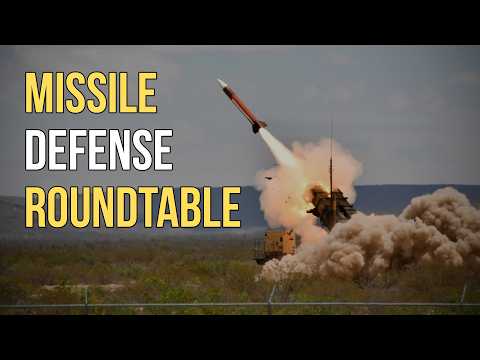
And what you saw, I think, were some very serious announcements from the Europeans on the defense industrial side. And what this amounted to was actually Europeans taking action to prepare for a Europe with less America. There was efforts to buy Saab AWACS aircraft, which is really useful for ISR, really important for NATO. You saw a major agreement on air tankers and airlift, which is a huge vulnerability for European forces, something they're really relying on the US. And you saw action when it came to missile defense. I think this was quite productive summit. My recommendation is that Europeans should hold a defense summit next year as well. I just don't really think that Donald Trump really needs to attend, because this was really about the Europeans getting together to agree to stuff, and maybe the US acts as the forcing function, but I don't think there was much delivered on the US side.
I don't You know, it was fine. Trump didn't cause a huge rift. He did talk about Greenland, which was so I think quite unfortunate. But then at the end of the summit was quite positive. I think if you're NATO, you left feeling that America was still, you know, in the alliance. So, but the deliverables, I think were actually quite quite important. And I think that they you didn't need the summit to agree to these things, but the summit is this forcing function that that gets them over the line. >> If anyone is interested in learning more about this, our colleagues Auto Spenson and Jonathan Virtel have published some great work on takeaways from the NATO summit worth checking out. Shifting gears a little bit, by the time this episode comes out, the UK will have a new Prime Minister. We're recording this on Thursday, so Andy Burnham will be confirmed as the new leader of the Labour Party tomorrow and officially take the helm as PM on Monday. And as he packs up his office at Downing Street, Starmer has claimed that he left the country in quote better shape than he found it. That said, Burnham will be inheriting a lot of challenges in the UK. Max, I'm wondering how you would assess Starmer's tenure as Prime Minister, if the UK is really better off, and what's in store for Burnham when he takes over?
>> Well, I think I think the UK is better off. In some ways, Starmer res- stabilized relations with with Europe, which I think was quite important. There wasn't real progress that occurred, I think, with the European Union, so I think it was in fact quite underwhelming, but it was in a pretty bad place. Previously, you could say Rishi Sunak had sort of begun the stabilization when there was a deal over Northern Ireland. But I think improved relations with Europe. And in general, I think Starmer had a very difficult dance to conduct between maintaining the special relationship with with Trump and Washington, while also trying to strengthen relations with Brussels. And I think you you can argue that he basically pulled it off, that the special relationship remains intact.
He's had to deal with a lot of gruff from Trump, but in general, things were okay. They got a trade deal, but then he's also maintained relations with the EU. They're They're on a better track. I think what you could also argue is that, and I think this is what many in the UK are arguing, is that he just wasn't bold enough. He wasn't bold enough to pick a direction. And so, by not really picking a direction, meant that there's no real economic benefit coming to the UK from slightly better and you know, more improved relations with the EU. There was no sort of economic windfall from some reversing some of the effects of Brexit.
And I think economically, he didn't really There was no real bold vision. And politically, I think was then somewhat at sea. I think there's been a lot done actually on the climate and energy front with David Miliband. Uh there's been some mixed results there, but I think in general, UK has a very tough energy situation and is making some strides there. But, I think in retrospect, it's Starmer kind of was a prime minister, and no offense to to lawyers, was a lawyer as prime minister. And that can be very useful and helpful. You know, there's the times with President Obama, like someone who's very rigorous and thoughtful in how they proceed. But, sometimes lawyers are very slow in picking a direction and acting. And I think that was pretty clear with Starmer. I think the UK is really thirsty for leadership to be pointed in a direction that will lead to, you know, real significant deep change to improve the country. And he didn't really provide that. So, it's hard to say that this is, you know, I think leaving the country better off, sure, but that's I think was quite a disappointing tenure.
>> One question that I have about the challenges ahead for the UK, particularly on defense. Defense Secretary John Healey resigned in June, warning that the then unreleased defense investment plan fell way short of what was required to meet the UK security goals. The defense investment plan has since been released, backing an additional 20 billion in defense funding through 2030, and bringing total defense spending over the next 4 years to approximately 393 billion, which will meet the 3.5% defense spending goal, especially following the Ankara summit, what does the future look like for defense in the UK, and how can Andy Burnham meet the challenges that the UK is facing?
>> Look, I'm not sure he can. I think the UK just faces a basic dilemma, and this is I think a dilemma that's been impacting the UK since World War II. Where it was the world's greatest military power. And in losing its empire and the cost of World War II, that the fiscal and economic demands to to maintain great power status is consistently your UK has gone through these crises where it's just too much for their economy to bear. And I mean, this was true in not to to go back in history, but in 1947, when the UK suddenly realized that it couldn't support the anti-communist forces in Greece, and therefore Truman had to announce, "Okay, we're going to get involved and provide aid to both Greece and Turkey." So, this has been, I think, just this dilemma for post-World War II UK of trying to maintain this big global military presence with an economy that can't sustain that. And it's really hard to make these sort of trade-offs.
And so, what you see with the UK is getting more realistic about what it can do. So, the defense investment plan, I think, is needed and great, but the ultimate thing is that the UK has to grow. It It's economy has to start performing, and then there'll be more money for defense. And so, right now, the UK is just sort of trying to >> pull some funding here and there to maintain things, but it's really about putting the UK, I think, on a stronger economic path, which then would mean more money for defense. Whether that's 3.5% or 3% doesn't totally matter,
because if your economy's not growing and you're 3.5%, it's better to be a growing economy that is getting bigger and at 3%. And so, I I think that the real challenge for any UK Prime Minister is how do you restore growth to the UK economy? I don't know. I think there maybe isn't a magic growth button. I would sort of recommend people Matt Yglesias who has his own Substack, former colleague of mine. He He went to the UK and sort of looked at UK land use and and how expensive housing is in the UK and how difficult it is to build. That could be one area.
I think Andy Burnham, you know, successful manager successful manager World Cups on the brain successful mayor of Manchester needs to
figure out a way to unlock growth. I think the other easiest path is to figure out a way for the UK to basically come back into the single market and to come back into the EU. And now they've you know, it was a complete economic own goal for the UK to basically wall itself off from from the its largest trading partner from an economy the size of China. So, UK needs to come back. Now, I
think many UK former officials and others speak friend friends of mine like Ben Judah, I think are slightly off base here in thinking that there's this clamor inside of Europe to bring the UK back. I think the UK historically has been seen as holding back the European project, has been holding back the EU in moving forward on many things and I think that perception is accurate. And so, the UK needs to come back to the EU with something really to offer. And I think that what it can offer is something on defense. This is where the UK as as much as I just demeaned its military is still one of Europe's great military powers. But what the UK has historically done when it comes to defense is said that's not the EU's responsibility. It's created a lot of initiatives, the joint expeditionary force, coalitions of the willing with like-minded partners, I use in air quotes, that basically push aside the EU, don't include the EU. And I think if the UK came to the table in Brussels and said the EU needs to help quarterback and coordinate the integration of European defense efforts because that's the idea that they're not using the EU as we've talked about is mind-boggling to me. And if the UK actually led and said, "Okay, you know, we want to be part of this.
The EU should be involved." I think that would be music to Brussels' ears and I think that would could lead to progress on the economic front. But if you just want like economic access but not membership and to cherry-pick the EU, they're just going to go anywhere. >> I think that's a great place to transition to another shifting political tide. There was big news in France this week. On July 7th, a Paris appeals court upheld Marine Le Pen's conviction for embezzling EU funds, but notably softened her sentence. Most interestingly, they reduced restrictions on her ability to run for office for 5 years to an effective 15 months, which means she has since announced her presidential bid for 2027.
Max, what do you make of Le Pen's potential return to the political spotlight? >> So, we're we're going to have to do a lot more on French politics over the next 8, 9, 10 months, however it is until the the first round of the French presidential election. I think it's in some ways quite a surprising announcement. I think the media vibe had been around Bardella, who it looked like he was going to be the candidate. I think the expectation was that Le Pen wasn't going to be able to run. She's now running. She's more popular than Bardella. I think Bardella, because he's so young, there is some opportunities and some pitfalls, I think, if you're the far right to his candidacy. On the one hand, because he's young, because there isn't much of a record, he could shapeshift to maybe move more to the center to assure of getting over 50% in a second round. But on the other hand, he was young and somewhat inexperienced, and so maybe there's more opportunities for him to step on a rake in some of the debates and other things. Le Pen is a much more, you know, seasoned candidate.
That comes with its own pitfalls. Everyone knows where she's stood. She's, you know, been very anti-EU, pro-Russian in the past. She's moderated uh some ways, but not fully. And I think she looks like a very strong candidate and so now the question becomes when you look at the first round because the way it works is first round is everyone runs and then it goes down to a final two. I think the nightmare for not just the European Union, but I think potentially for NATO as well because let's remember France has also you know pulled out of the NATO military command. It kicked NATO headquarters out of Paris back in the 1960s under de Gaulle and Le Pen I think is trying to sort of portray herself in de Gaulle's mode, but the nightmare is that the second most popular candidate that comes through is Jean-Luc Mélenchon of the far left. And so you have the far right and the far left and that would probably put Le Pen over the 50% line. And so the big question is in this then jumble of other candidates that are
all running on the center left and center right and Green Party, does anyone emerge? And I think there's a growing concern that they're all going to cannibalize each other's votes, that no one might emerge, that it might be a big mess and they might all be at like 18% and Mélenchon's at 20 and then you have that kind of quote-unquote nightmare scenario. We'll see. This is not dissimilar to what happened in some ways with Macron when 10 years ago he kind of emerged out of nowhere to create his own party and to create a new political force and then defeated Le Pen in 2017 in the second round. So I I think this is going to be fascinating.
This is going to be the election to watch because I don't think the future of the European Union is is at stake. I don't think Le Pen would pull France out, but it would create a very, very rocky period for the EU and create a lot of stagnation. So we'll have to see and we're going to be covering it I think quite closely here on the U of I.
That's it for today's episode. As always, if you enjoyed the show, please subscribe [music] and leave us a review wherever you get your podcast. You may also be interested in our sister podcast [music] Russian Roulette, which covers the latest on Vladimir Putin's Russia and the ongoing war in Ukraine. Our thanks to our producers Shannon Young, Otto Svensson, and Lexi Linafelter for coordinating and researching this episode. We'll be back soon with another assessment of Europe through a Washington lens. Until next time. [music]