DW: Ukrainian drones set more Russian tankers ablaze | ISW's Christina Harward
Transcript
Machine-transcribed by YouTube. Expect errors in names, commands and version numbers.
Let's bring in Christina Harward here. She's Russia deputy team leader at the Institute for the study of war. Welcome to the program. Christina, what impact are these attacks having on Russia?
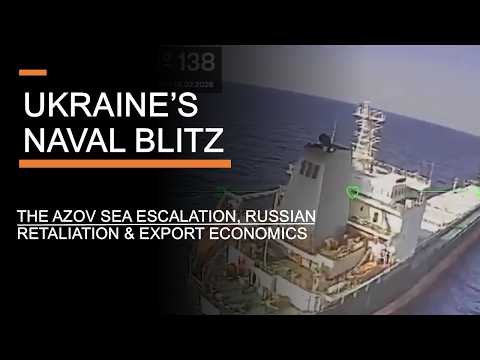
>> Yeah, I think it's really absolutely fascinating to watch how this strike campaign is unfolding the past couple weeks and we have this new element that we see now in the past couple of days even. So really what's happening here is Russia is attempting to find ways to mitigate mitigate the problems that the Ukrainian strikes have caused in the past few months um including the wide-scale gasoline crisis that we've seen in occupied Ukraine and throughout Russia. So Russia now is trying to somehow find another way to get gasoline to the peninsula of Crimea and Ukraine is seeing that and they're going after that effort as well now.
>> How do you explain this sudden rise in successful Ukrainian attacks on Russia's so-called shadow fleet? I mean that fleet's been around a while. Ukraine has had drones for quite a while. Why is this happening now?
>> Yeah, I mean so I think there's probably a couple different elements here but I think one to really draw out is if we look back past couple of months in 2026 but even going into the winter and potentially the fall of 2025 Ukraine has been conducting a very extensive campaign against Russian air defense systems as well as other infrastructure that support these systems like radars. So Ukrainians have really been blinding the Russians in really significant areas including in Crimea and in occupied Ukraine. So that's really helped Ukraine create these corridors where their drones and other um projectiles can fly through with a pretty high success rate of actually hitting the target. So I'm sure that's one of the elements that is helping Ukraine right now hit these vessels is that the Russian air defense umbrella is pretty degraded in peninsula in the peninsula of Crimea.
>> So how is Russia responding to these attacks? I mean normally Russia doesn't just sit back. It It throws something back in in return.
>> Yeah, absolutely. So, I think there's a couple different things going on. First, we have seen Vladimir Putin come out and acknowledge these pretty directly, um, that he really had no other choice. Uh, the the consequences was so widespread across his country. He had to acknowledge them. Um, now the main efforts that we're seeing coming out of the Russian government, one, they're really concerned about the effects on consumers. Um, so we're seeing efforts like them trying to work on price caps, as well as intensifying efforts to make sure that the supplies to the gas stations, including the independent gas station companies, is more direct from the refineries themselves. Now, in terms of actually necessary defenses to prevent these strikes from happening in the first place, this is where the Russian response is really lacking. Now, Vladimir Putin has himself stated last week that the Russian defense industrial base must boost its production of air defenses, but that's not going to be an easy task to accomplish overnight, particularly with the strike campaign I just described, where Ukraine's been knocking out these air defense systems left and right the past few few months, in occupied Ukraine and Russia. So, not only now does Russia have to defend more and more areas of its territory that Ukraine is now able to reach with these new Ukrainian drones that can get fly farther than ever, but they're also having to replace the air defenses that Ukraine is knocking out.
>> Christina, stay with us. I want to show you something else and ask you about it because it's not just strikes on Russian ships. Ukraine has again attacked oil refineries and reservoirs in several parts of Russia. This video you're seeing on your screen was released by Ukraine's President Volodymyr Zelenskyy on social media. Russian President Vladimir Putin had this to say about the Ukrainian attacks.
>> It is It is that the adversary seeks to damage the economy, but more importantly aims to create an atmosphere of anxiety within society. We understand that this objective cannot be achieved. Russia's energy system possesses immense resilience, among the highest in the world.
>> Immense resilience. Christina, is is it true that Russia is resilient enough to withstand these attacks over a longer period?
>> So, I think they're definitely going to try to do that. Now, this is something we haven't seen Russia face so far in this war. In 2025, they faced a similar
gasoline crisis due to Ukrainian strikes against refineries, but it happened at the end of the at the end of the high summertime demand season, and it wasn't quite as extensive as the strike campaign we're seeing this year. So, this is definitely a new endeavor that Russia is having to undertake. Now, I would note that Vladimir Putin obviously in all of these speeches he's giving now about the crisis, he's definitely trying to posture Russian strength. If you look and kind of read between the lines of some of the statements he's giving, he seems to be trying to tell the Russian people that these are sacrifices that they need to make because what really matters is what's happening on the battlefield where again Putin is projecting strength and continues to falsely claim that Russia is going to be able to achieve its really wide-sweeping battlefield objectives very quickly, which isn't by no means going to be an easy task.
>> At this week's NATO summit in Turkey, Ukraine got backing for its long-range strikes on Russia. Even US President Donald Trump said this could help end the war, bring it to a speedier conclusion. Do you think Ukraine has the capacity to continue pursuing this strategy.
>> So, I definitely think we can expect the Ukrainians to continue this strike campaign, if not intensify it. Cuz really the thing that's going to potentially stop this campaign is if Russia is able to build up its defenses, which again, as I noted, producing the amount of air defenses in the speed and the quantity that Russia really needs right now is going to be very difficult, and it's really unclear if the Russian defense industrial base will be able to meet Putin's demands for for that kind of boost. Um so, we really see in Ukraine has um increased its own domestic production of drones and um its own domestically produced missiles that we will likely continue to see the Ukrainians churn out day in and day out in order to be conducting these very large-scale strikes with lots of drones um and hitting targets over and over again.
>> So, >> [sighs] >> do you see any signs that this could speed up the end of the war to bring it to a conclusion, as Trump suggested?
>> So, I think it's definitely going to get Putin thinking a little bit, but there's really no indication from Putin's statements, as well as kind of other reports we're seeing in the open source from maybe sources within the Kremlin, to suggest that Putin has really changed his theory of victory. Now, Putin has stuck to the same theory for the past 2 years, and it's really predicated predicated on Putin's assumption that Russia just needs to outlast Ukraine and outlast Western support for Ukraine. Now, Putin is very focused on the battlefield, where he does hope he'll be able to have enough successes, or at least claim enough successes, that he can continue to push Donald Trump to force Ukraine to capitulate at the negotiating table.
So, that being said, in order to end the war and get Putin to actually come and sit down and engage in good faith negotiations that include compromises on both sides, you're going to need to change Putin's calculus. And I think right now the the place to do that is going to be on the battlefield. So, something we're definitely keeping an eye out for is how the different strike campaigns that Ukraine is conducting both in Russia and occupied Ukraine are going to have implications on the battlefield. We're starting to see some trickles of those consequences, but we're definitely going to keep an eye out for as this matures even more.
>> Christina, thank you very much. That was Christina Harward with the Institute for the Study of War.