Ukraine's Naval Blitz - The Azov Sea Escalation, Russian Retaliation & Export Economics
Transcript
Machine-transcribed by YouTube. Expect errors in names, commands and version numbers.
Suffice to say, the first half of July 2026 hasn't been a great time for merchant shipping. Over the course of a single fortnight, we've seen two theaters, four very different anti-shipping efforts, but from the Strait of Hormuz to the Sea of Azov, one consistent result. With Ukraine, Russia, the United States, and Iran all largely succeeding putting the squeeze on merchant traffic that I like, while at the same time struggling to protect the ships they do. Today though, we're going to focus on just one of those two theaters, covering the sudden uptick in Ukrainian anti-shipping efforts that have more or less swept most Russian traffic out of the Sea of Azov and are now pushing into the Black Sea, as well as some of what Russia's done in response, ramping up attacks on Ukraine's ports and the shipping corridor that have continued to carry most of the country's exports out into the international market. To do that, I'll start with a brief refresher on where the naval war was going into 2026, and then quickly zoom in on Operation Malochka, that sudden shift in the Ukrainian drone strike effort that in less than a month has taken shipping from a relatively rarely hit target to one where the number of monthly hits is racing towards the 200 mark. We'll then look at the Russian response in the maritime domain, and critically, what this might mean for both countries.
Elements like how they might respond militarily, and what the political and economic costs are likely to be. Then, as a final step, we'll ask what all this might mean for us and planners watching this situation from afar. What does it potentially mean if a drone force can suddenly de facto close a major shipping lane? And how should countries and militaries deeply reliant on international maritime supply chains potentially respond? Now, keeping in mind I am under the weather this week, I'm going to try and keep this one comparatively compact, but we have a lot of material to cover. So, we'll jump straight into it as soon as we've welcomed back a returning sponsor.
As much as it would be great if every event could get its own detailed PowerPoint breakdown, 2026 has just been so eventful that sometimes you might have to rely on the headlines. And when you do, sometimes the danger might not be not just missing stories, but missing parts of them. This headline saying United States have launched a new wave of air strikes against Iranian targets might be part of the story, but this one adds the context of Iranian attacks on shipping in the strait and the United States restoring its blockade. Well, this one clearly flags the prospect of more escalation from here. The tool being used here to flick between those headlines is long-term channel sponsor Ground News, a combination website and app that draws on thousands of news sources around the world not just to enable you to quickly compare headlines, but also sometimes to add some valuable context to the stories you're seeing.
Ownership information, for example, might be interesting, especially if you don't recognize a source. Ground News also provides you a range of tools to customize your feed and experience, and also tools like the blind spot feed, something I keep coming back to in an era of online echo chambers. What it can potentially help you do is surface stories that might be overwhelmingly covered by sources you don't ordinarily consume, potentially giving you a bit of an insight to what some others on the internet, or perhaps a bit closer to home, might be seeing and reading. And so, if you haven't yet had a look at this channel's longest-running sponsor, there will be a link in the description. That'll give you access to a 40% discount on Advantage plan, which is the one I use.
And so, with my thanks to Ground News as always, let's get back to it. Okay, so to kick things off, let's head to Ukraine, where once again, a country without much of a regular navy keeps finding new ways to fight a naval war. There, the status quo for years at this point is Ukraine has essentially established an anti-access area denial zone against Russian shipping in the Black Sea. That was based on a combination of tools like the Neptune anti-ship missiles that sunk Moskva, and also Ukraine's extensive use of kamikaze USVs, naval drones. That made it rather difficult for Russian ships, including military vessels, to transit much of the Black Sea, and especially those areas closer to Crimea, potentially within anti-ship missile range. And one thing we've observed is that status quo ossified is Ukraine got to the point where apparently they felt they had enough anti-ship missiles, including the new extended range long Neptune version of that missile, but felt comfortable spending some of them against Russian ground targets. At time of recording, for example, less than a week ago, Neptunes reportedly used against Russian storage facilities in Crimea. Of course, even though the Russians now couldn't safely sail most of the Black Sea, they still had a lot of anti-shipping capabilities of their own, many of which Ukraine had no direct equivalent to. And so the prevailing status quo prior to these most recent escalations was essentially one of mutual partial denial and corridors. Ukraine's main maritime export route, critical for getting the country's agricultural exports out international market, basically began to more closely hug the coast. That meant while the ships were in Ukrainian territorial waters traveling from ports like Odessa, they were comparatively easy to protect and further away from potential Russian assets that might try and go after them. A significant chunk of the journey would then take place within the waters of NATO states, essentially leaving the Russians with the choice of trying to engage those ships in the northern part of the route, or alternatively, taking the risk of firing offensive weapon systems into NATO territory.
We also saw significant amounts of Russia-linked traffic pulling essentially the same maneuver on the eastern side of the Black Sea, hooking east and then south as you can see on screen there to remain as far away from potential Ukrainian threats as possible, and then, ironically enough, spending more of their journey inside Turkish waters because apparently, despite Sergey Lavrov reportedly saying back in 2025 that NATO had declared a real war on Russia, many of their ships seem to feel safer in or near NATO waters than they do playing Marco Polo with Ukrainian drones further out in the Black Sea. While that nervous exercise in range maximization played out in the Black Sea, we obviously saw the Ukrainian mid and long-range strike effort turn more and more attention to Crimea. Ukraine had long succeeded in scaring most of Russia's naval assets away from the Crimean Peninsula towards more distant ports like Novorossiysk, but as we covered in recent episodes, more recent strikes have focused more on the infrastructure and current capacity of the peninsula itself. Fuel and power shortages have become more pressing, prices where fuel is available have shot up, and the Kremlin has had to announce a large financial support package for the tourist business in Crimea because apparently, while there might be some tourists that appreciate the occasional drone air show, that's not a large enough demographic to hold up an entire industry. The maritime aspect of that effort, though, was an attempt to chop off Russian supplies to Crimea. Most critically, the fuel supply. That's where we got strikes against things like the port infrastructure at Kerch, or the ferries that used to carry cargoes like railway cars to Crimea from Russia proper. As we discussed in the past, a lot of that activity focused on the strait or the areas immediately around it. But ever since the 6th of July, the Ukrainian effort appears to have broadened significantly. The new apparent target, lighter shipping in the Sea of Azov.
As you can see here, the Sea of Azov is basically sectioned off from the Black Sea by the Kerch Strait, and compared to a lot of other maritime zones out there, it's generally comparatively calm and also quite shallow. That makes it a generally sub-optimal environment for very deep draft heavy ships like super tankers, but logistically very useful and quite forgiving for shallower draft smaller vessels. And when I say shallow, I do mean shallow, with the Sea of Azov having an average depth of something like 7 m. Well short of what you'd need for something like an Alibek destroyer, let alone a super tanker. The unified deep water system of European Russia basically meant that as long as Russian ships met the size requirements, they could travel, for example, from the Baltic Sea to some of the cities of European Russia, and then into the Sea of Azov via Rostov-on-Don.
That made it a very important logistical link for a couple of reasons. It was a way to get maritime cargoes to some of the occupied cities of Ukraine like Mariupol or Berdiansk, another way to get supplies from Russia proper over to Crimea, and a convenient pathway for Russian exports out to the international market. The sea provided Russian logisticians with a fantastic additional tool. In the past, there may have been sporadic attempts by the Ukrainians to poke at that part of the Russian logistics system, but the serious effort we're talking about today really only appears to have kicked off on the 6th of July. According to the Ukrainian Unmanned Systems Forces, this took place under the banner of Operation Moloshka, or Moskva Lyazhet Cherez Krym, Moscow will fall through Crimea. And for observers who might be interested in what this potentially tells us about threats to shipping in general, not just the influence on the war in Ukraine, there are a couple of things to flag right up front that set this Ukrainian effort apart from previous ones. For one, the standard target type was different. Whereas in the past we've seen the Ukrainians go after larger tankers, larger ferries, or Russian naval ships, this was very much a war against the littler ships. On one day, I think the average displacement was about 7,000 tons, not the massive ocean-going giants that are going to be queuing up at the Suez Canal. That meant to take the same amount of displacement and throughput capacity offline, the Ukrainians would have to hit more ships.
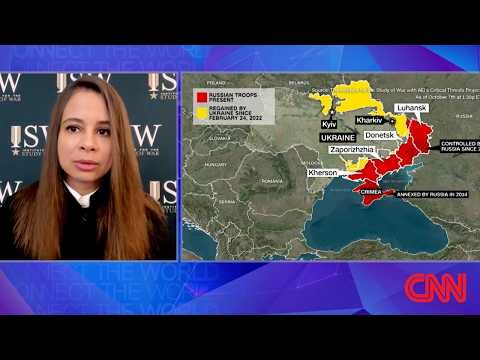
But given they were smaller, they could also get away with using different tools. If previous Ukrainian strikes against underway maritime targets had been dominated by anti-ship missiles and USVs, here we've seen a lot more Ukrainian reliance on the same tools they rely on elsewhere, UAVs, with a specific focus on larger one-way attack drones. Of all the footage being released to these attacks, and there is a fair amount of footage being released, overwhelmingly we're not getting it from the sea-level POV of an angry speedboat screaming witness me, it's the shallow-diving attack profile of the Ukrainian one-way attack drone that we've seen so many times before. Before we even get into the numbers then, that raises three initial observations. One, from a drone attack perspective, the Sea of Azov is a bit of a mixed bag. On one hand, it's relatively close to the nearest Ukrainian launch points, especially compared to the far eastern sections of the Black Sea. But on the other hand, as you can see from the territorial control map on the right, in order for Ukrainian one-way attack drones to get to the target area, they first have to fly over normally Russian-controlled territory. That means that in order to get to the Sea of Azov, Ukrainian drones presumably need to pass through the air defenses in those areas.
And if we're seeing hits, presumably that means those air defenses aren't succeeding in filtering everything. Now, given many of these areas are very heavily affected by Ukraine's mid-range strike campaign against Russian logistics, perhaps that's not surprising. Attacks on Russian air defense systems have been a major part of that effort, potentially thinning out what they have in the area. Combine that with the economics of the systems being used, where you could, for example, fly these one-way attack drones at higher altitudes where only missile systems can reach them, basically forcing the Russians to make a choice between firing expensive interceptors at a relatively cheap drone, or taking the chance that it makes it through and finds its way to a tanker, it's arguably not that surprising, all things considered, that the Ukrainians have been able to get their drones through. But it perhaps provides additional evidence that even though the Russians have focused attention and resources on ramping up their CUAS capabilities in Zaporizhzhia and Kherson, those additional mobile fire group and interceptor assets aren't dense and capable enough, at least yet, to stop the Ukrainians effectively carrying out this kind of strike effort.
The second point is it demonstrates once again how far the technology some of these one-way attack drones have come, even compared to a few years ago. We'll have a look at some of the Russian footage as well later on, but to focus just on the Ukrainians for a moment, what we're seeing here are families of one-way attack drones with enough range to make it from Ukrainian territory over Russian lines and into the Sea of Azov, a stable enough connection and good enough sensors to find and engage a moving target, and unlike some of the designs from earlier in the war, presumably pack enough of a high explosive payload to do a useful amount of damage when they arrive. That gets us to important observation number three before we get into the dynamics of the campaign, which is the need to be specific about what these drone attacks are actually doing. I've seen commentary suggesting that at this point, Ukraine has sunk anywhere from dozens to north of a hundred Russian ships as part of this effort. That is nowhere close to being true, and it's not something we should expect to be true. When you take the kind of relatively limited payload you might expect on a one-way attack drone and slam into something the size of a transport ship, the odds of you actually sinking it are going to be very, very low, especially the damage tends to be well above the waterline.
It's also not what the Ukrainian drone forces are claiming as happening and not what they're claiming they're trying to achieve. As at time of recording, the USF claims to have hit 161 Russian ships and boats over the first 17 days of July and sunk zero. The stated objective expressed by Magyar is to interdict and disable, not to destroy and sink. Now, I do think there are some cases where the results go well beyond what it would take to just disable a vessel. This gas carrier, for example, appears to be loaded at the time it was hit and as a result started burning pretty fiercely. But for the most part, I think the data suggests so far that the overwhelming majority of these targets that we're going to be talking about have been hit and potentially disabled, but they haven't been destroyed or sunk. Those observations in place, let's talk about how this went down and what it can potentially tell us.
The first indication in the media of what the Ukrainians might be up to here came on July 7th. That day we got a report that the previous night the USF had struck eight Russian tankers in the Sea of Azov, all of which the USF claimed had been positively identified, were subject to international sanctions, with an average deadweight tonnage of about 7,000 tons per vessel. By itself, that was arguably interesting and a bit of a painful night for Russian fuel logistics heading to Crimea, but not necessarily that impactful from an operational strategic perspective, until it happened again. And again, and again, and again, and again. In the following nights, that initial achievement of eight ships hit in a single became a bit of a low baseline.
On the evening of the 8th, they claimed 12 Russian tankers, a tugboat, cargo ship, and an oil terminal. By the evening of the 13th, the claim for overnight hits was now 15 vessels, which started from a historical perspective to give the entire effort a bit of a happy times vibe. From a historical perspective, this is a phenomenon we've seen before. A new threat emerges to civilian shipping, the attack side is slow to adapt in the initial phases, and as a result losses are run up quickly. As any submariner in the audience probably know, during the Second World War, the German U-boat force was described as having two happy times. The first starting in July 1940, where German U-boats were able to rebase into France and then strike freely out into the Atlantic, and the second in January 1942, after the Germans declared war on the United States, and German U-boat captains were quickly able to run up a horrific tally off the East Coast of the United States, before US command was able to get its act together on things like convoying and anti-submarine warfare. Now, there's obviously no real comparison between the Russian losses of the last few weeks and Allied losses of hundreds and hundreds of ships during that period in 1941. But arguably in this case, the hit rate might not have dropped off so much because of the defensive adaptation of the side being targeted, but instead because the Ukrainians were starting to run out of targets. Officially, there was no Russian announcement that shipping through the Don-Azov channel would be cut off, or that shipping in the Sea of Azov would be decreased, but sources in Russia's grain industry reporting that shipping was temporarily being stopped as early as the 11th of July. Some of the satellite imagery from the following days that we'll look at a bit later, backs that story up. That seems to suggest that Russia couldn't find a quick and easy way to defend these merchant ships, and so after a couple of days, rather than just letting the Ukrainians continue to run up the tally, they de facto removed most of the targets from the target area. What that primarily seems to have achieved though, is Ukraine shifting the target area. By July 15th, just over a week after this campaign started, the US AF was now claiming to have hit more than 110 Russian vessels, with the total for the night of the 14th reaching 17 oil tankers, two gas tankers, and a single tugboat. Only now a majority of the targets being hit weren't in the Sea of Azov, they were further away in the Black Sea. As Magyar publicly put it, quote, "The first round of the naval battle is over, now it's the Black Sea's turn." End quote. Interestingly, most of the hits we've seen claimed so far, I have 17 July on the right there from the US AF as an example, haven't actually been that far into the Black Sea. For the most part, they're only just beyond the Kerch Strait, which I think raises questions about the flight path being taken by some of these Ukrainian drones, with a lot of the hits concentrated relatively close to the main Russian port on the Black Sea at the moment, Novorossiysk, with the hit geo-locations on some days looking like the Ukrainians are almost on camping it. That does apparently leave the Ukrainians with the target identification and validation problem though, as not all traffic in and out of Novorossiysk is going to be sanctioned and Russia-linked. There are also going to be ships carrying Kazakh oil out to the international market, for example. And in one recent reported case, a tanker reportedly chartered by Exxon, was apparently attacked near Novorossiysk by a pair of drones. In the vast majority cases though, it does appear it's been Russian ships or the shadow fleet in the crosshairs.
Given the greater ranges involved, that meant longer-range one-way attack drones, and also a return of Ukraine's USVs. In the Sea of Azov, they're not particularly useful, because Ukraine doesn't really have anywhere good to launch them from, and to get them into the Sea of Azov from the Black Sea, they'd have to pass through the Kerch Strait first. And if you're able to get a USV through the Kerch Strait, one imagines you'd rather just ram it into the bridge. The Black Sea phase of the effort though, saw the death skis return in full form. Two ocean-going tankers, names given as the Louise One and Bunda, were both reportedly hit by naval drones belonging to the Ukrainian SBU, and the footage on the right there gives you an idea of what those attacks look like.
The Ukrainians claim that one of the hit vessels, the Louise One, had been involved in transporting about 3 million tons of Russian oil over the course of 2026 to date, and while the Ukrainian naval were attacked by Russian aircraft on the way to the target, they nonetheless made those hits. That gets us to where the campaign, which is still ongoing, currently stands as at time of recording. While verifying that attacks are happening here is comparatively easy, determining exactly how much damage has been done to the ships, that's considerably harder. A lot of these claimed Ukrainian engagements are supported by videos showing the apparent engagement, but aftermath footage, that's a bit spottier. We have it in some cases, but not in others, although that's perhaps partly understandable in cases where only a single drone is used or only one makes it the target, as cameras do tend to suffer a drop in performance after they explode. What we can speak to though, in passing, are the Ukrainian claims and more significantly the observed impacts.
As at time recording, the Ukrainian claim was 116 Russian ships and boats hit in the Sea of Azov from the 6th to the 14th of July, before the second phase opened in the Black Sea with 20 strikes on July 15th. The running tally according to the US board for July now is just over 170. A significant chunk of that can be at least partially validated through the footage that's been released and also satellite images like these. Well, you probably don't have to be a maritime expert to assess that the ships in those images probably aren't going to be doing their best work going forward after a close encounter of the drone kind. What I think is pretty consistent through these images, as suggested by some Ukrainian sources, is the goal here very much is to disable, not sink or destroy, and that to avoid potential ecological disasters that after all would affect the Ukrainian coastline, the Ukrainians have apparently putting a lot of focus on not causing the kind of damage that might lead to oil spill. It's worth noting that given the ranges involved, the Ukrainians could potentially have hit some of these ships with something that hits a lot harder, like their anti-ship missiles, but we've seen most of these engagements carried out by drones that carry comparatively less bang, but offer more control over where that bang happens. In some ways though, it might be easier to identify some of the effects of these attacks than the exact number of ships hit. The image on the left there, taken from a Reuters article, shows the level of activity on the 6th of June this year. More than 40 vessels visible just in that relatively small area waiting to cross the Kerch Strait. The image on the right there shows the very different situation on the 11th of July, just a couple of days after these Ukrainian attacks began.
Forget 40 ships waiting to cross and a conga line of them actually doing it. Now, there are a few of the nine vessels in view total, suggesting that even if Moscow hasn't come out and officially banned this kind of traffic, a lot of the people owning or operating those ships have apparently decided to ban themselves. We've also seen Russian official statements that semi acknowledge the scale of the impact without directly acknowledging the scale of the impact. Russia's Foreign Minister Sergey Lavrov, for example, accused Ukraine of quote terrorism pure and simple and quote and went so far as to say the Ukrainians were in some ways worse than pirates because at least to paraphrase him pirates were in the business of stealing cargoes, unlike the Ukrainians who were in the business of attacking them. Now, as to how exactly one is meant to successfully steal the cargo off a ship using a one-way attack drone, I'm not entirely sure, but given the rate of drone evolution in this war, who knows. A final clue of the scale of the impact is Russian government chatter about rerouting logistics for their critical exports. Russia's Agriculture Ministry, for example, hinted that the situation in the Sea of Azov wouldn't impact Russia's critical exports because grain could potentially be rerouted through alternative ports. Quote, "Given Russia's significant capacity for transshipping agricultural cargo in various regions, supply logistics will be redirected if necessary." End quote.
One imagines that kind of statement probably wouldn't be made if there was no chance of the if necessary situation eventuating. For now though, the Ukrainian campaign in the Black Sea appears to be ongoing and the indicators watch from here are going to be things like the logistical situation in Crimea, the response of international markets, and what steps, if any, Russia has to take to reroute critical exports. But for the purposes of this episode, there's already an initial observation to make. Over the course of roughly 2 weeks, Ukraine decided to match a fraction of its outgoing one-way attack drones against Russian maritime traffic and from what we can see so far, the maritime traffic is very much losing.
The Sea of Azov has considerably thinned out as a logistical route for the Russians and the status of safe shipping on the Black Sea is now very much up in the air. And if we pivot over to the Russian response, it's clear that dynamic is not one way. If we look at Russia's response to Ukraine's operation Malochka so far, there are a couple of questions observers might be asking. Why did it take multiple days, for example, for the Russians to start clearing those very vulnerable ships and boats out of the area once it became clear the Ukrainians were gunning for them? Why, after everything they've seen so far from the Ukrainian middle and long-range strike campaigns, were they apparently unprepared for the Ukrainians to add shipping to the target list? The thing is, most of those questions focus on defense and defensive adaptation. One thing I'd observe over the course of this war, though, is that while Russian defensive adaptations aren't always as quick as they might like, they have generally been fairly reliable in some areas when it comes to mirroring Ukrainian steps or innovations. The Ukrainian ramp-up in middle-range strikes against Russian logistics, and especially fuel logistics, for example, has been partly mirrored by Russian efforts, including the reported destruction of more than 150 gas stations in Ukraine, primarily at the range of 30 to 50 km from the front line. In some ways, this is a useful example because it demonstrates that mirroring on the Russian side isn't always going to look exactly the same as the Ukrainian model. The Ukrainians are focusing comparatively more on using lighter loitering munitions against dynamic targets like trucks, while the Russians rely proportionally more on larger adapted one-way attack drones that have been used against static targets like gas stations and storage facilities. But the basic principle we just identified holds true. While there are plenty of times where it's Russia making the first move, it's often going to be Ukraine finding an innovative way to inflict pain, followed by Russia trying to mirror and scale the approach.
In this case, while we haven't yet seen the Russians match the sheer scale of the Ukrainian strikes, they have engaged in at least some retaliation. As we noted earlier, while the level of dependence might be different, Ukraine, like Russia, does rely on maritime traffic in the Black Sea, with perhaps its most important role being to help get Ukrainian grain out into the international market, helping to hold down global prices, while at the same time giving Ukraine a source of foreign exchange. Since Operation Molochnitsa kicked off, we've seen the Russians appear to retaliate against that Ukrainian maritime corridor in at least two ways. They've struck Ukrainian port infrastructure, especially at Odessa and Mykolaiv, and they've also launched strikes against some of the merchant ships themselves.
On the 15th of July, for example, it was reported that Russia had struck four merchant ships in the last 48 hours. The first of those was a Togo-flagged cargo ship, reportedly unloading mineral fertilizers in Odessa region, with five crew members reported killed. The following day, two merchant ships sailing through Ukraine's Black Sea corridor under the flags of Tanzania and Liberia. And a few hours after that, a drone strike on a Marshall Islands-flagged cargo ship, once again in the Odessa region. From a purely technical perspective, based on some of the footage we've seen the Russians release so far, it appears that some of the tools being used bear a lot of resemblance to the Ukrainian ones. In the Russian case, adapted versions of Shahed-style one-way attack drones, with the video suggesting a live connection to an operator, an integrated camera, and the ability of an operator to provide terminal guidance to help the system hit a dynamic target like a ship.
At least so far, the number of ships being hit by the Russians is significantly lower, but that doesn't mean the impact isn't there. We've talked about the risk dynamics of merchant shipping in the past, the role of insurance, and just how little risk it takes in order to cause a shipping route to potentially freeze up. And in this case, the claim published on the 15th of July, linked to Ukraine's Farmers Union, is that Russian attacks had already chopped off about a third of Ukraine's grain export capacity on the Black Sea. Insurance was reportedly getting more expensive, where it was possible to get it at all, and a number of shipping providers were looking very closely at whether they wanted to take additional jobs on the route. For Ukraine, this represented a bit of a reversal of an economic trend. Up to this point, they were well on track in 2026 to export more grain on the Black Sea than they did in 2025, and not by a small margin. But that obviously doesn't work if the infrastructure is being hit, and more importantly, if these ships aren't willing to sail. And without an acceptable risk profile, insurers aren't willing to insure and without insurance, the ships don't sail.
Now, since these attacks ramped up, Ukraine's Deputy Economy Minister has told the international media the country will do everything it can to protect its seaports, the ships traveling to them and the goal was to maintain grain exports in 2026 at no less than last season's levels. But even though Ukraine might geographically have an easier time that year, the protecting less terrain and they're further from the Russian launch sites than Russian ships in the Sea of Azov are from Ukraine, for example, this war has shown time and time again that intercepting drone attacks against shipping consistently enough to make a difference is a challenging ask. And so, especially if the Russians bring some of their other tools to bear or try and scale this effort up, there's a chance we're heading towards at least partial mutual denial. One where Russia struggles to maintain maritime supply lines to Crimea or get some of its grain and energy exports out to the international market.
At the same time, Ukraine's ability to get its grain out via sea might be curtailed. It's worth noting that in some ways, Russia has had the ability to go after this kind of civilian traffic since before the war kicked off. They have long-range anti-ship missiles, ships and more importantly, aircraft capable of carrying them and at least back in 2022, a fairly decent submarine complement in the Black Sea as well. A lot of that has now been whittled away by constant Ukrainian attacks and the attrition caused by the war, but in some ways, the increase in Russia's long-range drone arsenal has given them more options in this area. Hitting civilian ships with a sheer head style drone might cause a number of civilian casualties, but slamming a couple hundred kilos of supersonic high explosive into the side of one with a full-size anti-ship missile, that was always going to represent an even higher diplomatic price. So, we might assess that what's changed compared to the likes of 2022 or 2023 is that Russia is now demonstrably more willing to go after these kind of targets like civilian ships and that part of that might be the feeling that they've got systems in inventory that are better suited to the task while minimizing the relevant diplomatic fallout. In both cases though, despite the different scale and impacts the efforts, there is a point that's consistent between them.
This is a situation where the sword is clearly outstripping the shield. The Ukrainians have demonstrated an ability to turn an entire sea into a practical no-go zone for maritime traffic in less than 2 weeks, while it doesn't seem to have taken the Russians particularly long to go from presumed decision to action to a noticeable impact on Ukraine's export capacity. The net results, unless some kind of agreement is reached, is likely to be more pain across the board. The supply situation in Crimea has clearly deteriorated over the last couple of months for example, and they've been forced to become more reliant on the Kerch Strait Bridge. The stated goal of the Russian authorities in Crimea is to return to a 2-6 power schedule, that is 2 hours with electricity followed by 6 hours without, as soon as the situation allows, suggesting even that's not something they feel they can guarantee under current conditions. And if Ukrainians keep up the pressure, it's an open question as to how quickly they could possibly get to that point. Because while so far the Russians have demonstrated they can try and inflict pain on the Ukrainians for going after their shipping, what they notably haven't been able to do is stop them.
So, acknowledging the danger that always comes from trying to break out the crystal ball, let's talk about what potentially happens next. What does this shift in the naval war first potentially mean for Russia and then Ukraine? There are several very different scenarios on how the naval strike effort goes from here. We could hypothetically see a gradual or sudden de-escalation, or maybe a stabilization around the new normal. But in interest of time, and because I think it's potentially the most dangerous one for the international market, I want to focus on the scenario of continuation and escalation. Basically the case where the Ukrainians continue to ramp up their strikes on Russian shipping where they think they can get away with it, and one where the Russians dedicate their resources to retaliating at sea or against Ukrainian ports as well. That decided for each of the countries, I want to focus on four key questions. What does it potentially mean militarily, economically, politically, and globally? On the Russian side, I think there are three important military aspects to consider here. Firstly, what military resources if any is Russia going to divert to try and provide better protection for their ships? As yet, we haven't seen much evidence of a defensive response in the released footage. But the Ukrainians have expressed their assessment that some diversion is going to happen. The head of Ukraine's unmanned systems forces, which have been leading these strikes, has suggested they believe the Russians might be in the process of deploying up to 200 drone crews from the front line to help protect shipping, as well as other air defense assets like MANPADS and machine guns. Of all the assets they listed, the most interesting one is the claim that drone operators from Russia's elite Rubicon unit might be redeployed to try and protect these ships. You can imagine a scenario, for example, where a shadow fleet vessel was assigned a couple of operators, maybe two or three, and with some basic kit, presumably interceptor drones, would try and protect it from Ukrainian attack. If that happens, even if the deployment were only to constitute a few hundred operators plus other personnel with things like machine guns and MANPADS, that by itself might be reason for the Ukrainian military to be happy with the results.
There is currently a lot of demand for Russian short-range air defense assets, and especially for good drone operators. We've seen plenty of evidence that Russia is in the process of trying to better protect its supply lines against Ukrainian mid-range strike, but that means demand for a lot of the same assets we just described: mobile fire groups, electronic warfare, and interceptor drone pilots. If those assets are floating in the Black Sea, they can't be in Zaporizhzhia, Kherson, or the Donbas. And you can potentially imagine a scenario, as we've sometimes seen in the past, where if a Russian target type becomes sufficiently protected, the Ukrainians just switch to targeting something else, while still being prepared to switch back at short notice if those defenses ever go lax.
The second military aspect of this is what this potentially means for Russian supply lines into Crimea and the position of the Russian military in Crimea, Zaporizhzhia, and Kherson. As we hinted before, even before the beginning of Molochka, the Russian authorities on Crimea described the fuel situation as tense. If the Sea of Azov increasingly remains a bit of a no-go zone for Russian tankers, that problem could potentially get worse, leaving the supply situation both the civilian population and also Russian military units in the region increasingly reliant on the arteries that do remain, the Crimean Bridge, which we'll come back to a bit later, and the supplies that are still able to be sent by road or rail through Zaporizhzhia and Kherson. I think it's worth remembering that in the past, Russia has succeeded in denying large parts of the Ukrainian civilian population access to things like power and running water before, and that by itself obviously didn't precipitate any kind of Ukrainian collapse or surrender.
The military concern is probably more to what extent will the Russians be able to maintain the readiness and fighting power of their units in the area if a lot of the logistics throughput capacity they do have is dedicated to keeping Crimea at least semi-functional. The final element is what kind of offensive resources is Russia likely to have to reallocate in order to go after Ukraine's maritime supply lines. We'll come back to that when we talk about the Ukrainians a bit later on. Instead, let's talk about everyone's favorite part, economics. The key SparkNotes up front is that key Russian exports like grain or oil don't entirely rely on the Black Sea by any means, but that doesn't mean significant disruptions to the route wouldn't hurt. Before Operation Molochka, for example, Russian oil exports out onto the Black Sea were actually on an upward trend. Reportedly, some of the damage caused by previous Ukrainian drone attacks on Novorossiysk had been repaired, and an increase in oil shipments had followed. In an environment where Russia was incentivized push more crude out to the market as a result of the fall in domestic refining capacity, that mattered. Similarly, the Black Sea route doesn't account for all of Russia's grain exports, but under ordinary circumstances, one estimate I found is that about 70% of them do. Now, of course, just because shipping is being threatened doesn't mean all of those exports ju