The Future of U.S.-UK Defense Cooperation with UK Secretary of Defence Wes Streeting
Transcript
Machine-transcribed by YouTube. Expect errors in names, commands and version numbers.
Good morning, everyone, and welcome to CSIS. My name is Max Bergmann. I am the director of the Europe, Russia, Eurasia program here. And first, I want to really thank our partners for helping sponsor this event for the US-UK Defense Forum that we're hosting today. Our partner is the Royal United Services Institute, otherwise known as RUSI. A really key partner, they're a think tank based in the UK, based in London, and working with them has been a real treat during my tenure. And we are really honored to host the defense secretary, the United Kingdom Kingdom Secretary of State for Defense, the Honorable Wes Streeting. Mr. Secretary, we're really glad to have you in Washington. It is now a beautiful October day. Yesterday, when you arrived, we had broken all-time record, we hit 90°. I don't know what that is in centigrade, but I know it's way too hot for October, but we're back to lovely fall weather, but it's a real pleasure to have you to discuss the US-UK relationship when it comes to defense. It's one of the most critical defense relationships, if not the most critical defense partnership that the United States has.
And we are grateful to have you. Secretary Streeting has led the Ministry of Defense only since July, but he brings a distinctive perspective to the job. He has represented Ilford North in Parliament since 2015, and spent 4 years on Labour's front bench in opposition. And from 2024 until the spring, he ran the Department of Health and Social Care. So, he brings a unique perspective in in sort of sitting atop the UK's essentially budget situation, its budget challenges of how do you manage both spending on defense and spending on health care. And and I think we're really looking forward to hearing, at least in the Q&A, I'll I'm going to pepper you with some questions about how you balance defense and social spending, as I think that's a critical challenge facing many countries across Europe, including here in the United States. Um his his focus he has focused on on on pushing hard reform and and delivering and that comes at a pivotal moment for the special relationship. Europe is being asked to do more for its security.
The US defense posture is shifting. There's an ongoing European force posture review and the UK now has a new Prime Minister, a new government and an ambitious agenda and a new defense investment plan to chart its path forward. So there is a lot to discuss and the questions ahead are quite significant. What is the next chapter for US-UK defense cooperation look like? How can UK serve as a bridge between Washington and Europe? And what will it take politically, industrially and militarily to deter our adversaries
in the years ahead? These are all questions that we are reckoning with here at CSIS. I know they're questions that are being reckoned with in ministries of defense and that are defense department as well. And so there's no one better place to speak to these issues than our guest. So I would ask everyone to please join me in welcoming the United Kingdom Secretary of Defense Wes Streeting to Washington and to CSIS. Thank you, sir. >> [applause]
[applause] >> Good morning and thank you very much for that introduction. I'm happy to bring the sunshine. It's not something that defense ministers are generally known for. And I can't promise that when I talk about the threat environment we're operating in that we'll continue with that sunny disposition. I also enjoyed your characterization of my experience in in government. Depending on how you look at it, um I might well understand fiscal pressures in government from the two departments that I've now led. um, think some of my friends in the Treasury would consider me to be personally a major contributor to some of the budget pressures that we face. Um, I was once described in a previous spending review negotiation as the Katniss Everdeen of the, uh, of the, uh, spending review process.
Um, which is no doubt why, um, the one of the reasons why the Prime Minister asked me to take on uh, the role of Defense Secretary at a time when we are investing more, but also need to go further. But, um, it's great to be here. Um, uh, as it says here, good morning. Uh, uh, at least that's what I'm told. My body clock, uh, is still negotiating with the time difference. But, um, as I arrive in Washington, I'm absolutely clear about one thing, which is there's rarely been a more important time for Britain and America to come together, to think boldly, and to act decisively. So, I'd
like to thank our hosts for bringing us together, uh, and for bringing together such a wide range of expertise in the room. The gravest dangers of the 20th century are returning, armed with the technologies of the 21st. And it is not yet clear if this century will be defined by freedom or tyranny. Russia is waging war in Europe. Our adversaries are probing and provoking us on a daily basis. The threats we face are growing and getting closer to home. And the very nature of warfare itself has been transformed before our eyes. Britain and America have never been content to simply watch history unfold.
At defining moments, we have helped determine its course. The front line for freedom today can be found in Ukraine. Ukraine did not ask for this war. President Putin invaded their country. Not just four and a half years ago, but more than a decade ago, with his invasion of Crimea. It's not just the history of the 20th century that teaches us that appeasement fails. That has been our experience with Putin since 2014. And I saw the consequences of his imperialism firsthand when I visited Kyiv this summer. The bombed-out shopping centers, the makeshift shelters in underground car parks, children's toys lying in the rubble of the homes that Putin's war machine destroyed.
On this side of the Atlantic, the war is even further away from the lives of ordinary Americans than it is from our daily lives back home in London. But the people of Ukraine are fighting for a principle that runs through the finest traditions of American political thought. A principle that created the United States and that we have stood for together once we've gotten over that messy divorce 250 years ago. The principle is that a free people have a right to determine their own destiny and that no nation should live at the mercy of a more powerful neighbor. But our shared history also teaches us something else.
That defending freedom is not simply a matter of principle, it is a matter of national self-interest. After the Second World War, President Truman and General Marshall understood that the security of the United States could not be separated from the security of Europe. And together with Britain and our allies, America helped build the institutions and alliances that would underpin decades of transatlantic security. From the Marshall Plan to the founding of NATO, these were not simply acts of generosity, they were acts of foresight and national self-interest. Because that generation learned through bitter experience that the cost of defending peace today can be far smaller than the price of restoring it tomorrow.
That same lesson should guide us now. Ukraine may be thousands of miles from American shores, but if aggression is rewarded, if borders can be withdraw redrawn by force, if the sovereignty of nations becomes negotiable, the consequences will not remain confined to Ukraine or to my continent. So, standing with Ukraine is not a choice between our values and our self-interest. It is a recognition that ultimately they are inseparable. Warfare is as tough and as bloody and as deadly as it has ever been. But Ukraine has changed the character of conflict forever. A $650 drone can destroy a $4 million
tank. Uncrewed boats costing a quarter of a million dollars sink warships worth $65 million. The The time between detecting and striking targets has compressed dramatically. And new technology can be deployed in weeks rather than years. The lesson is clear. Military power is no longer measured simply by who has the biggest, most expensive platforms. It is about who can innovate fastest, produce at scale, and
turn relatively cheap technology to devastating military effect. Our competitors are combining industrial scale with rapid advances in autonomy, AI, drones, cyber, and electronic warfare. So, modernization is not just a case of inventing or buying new kit or technology. Modernization is about getting affordable, adaptable, accessible weaponry into the hands of our military as quickly as possible. The old model of procurement that involved defense giants and lengthy specs, tortuous legal compliance, and endless form filling is obsolete. We are now in a world where weapons are designed, developed, and deployed by engineering firms in the blink of an eye. And those nations who do not adapt will not only be left behind, they will be left at risk.
That demands improvements to productivity and procurement. In the UK, we've set ourselves a target to cut the time from concept to contract for new platforms from 6 years to two,
adapting existing ones from 3 years to one, and for everything else to under 3 months. That is because advantage increasingly belongs to those who can learn, iterate, manufacture, and field capability fastest. Innovation requires us to take risks, to learn from setbacks, and when necessary, to fail faster and
adapt faster. The private sector does it every single day. But this culture does not come naturally to politics. We operate in an environment where every mistake is magnified, every setback is scrutinized, and every failure is tomorrow's headline. But in a world changing at breakneck speed, the most dangerous words in defense are not we tried and failed, but
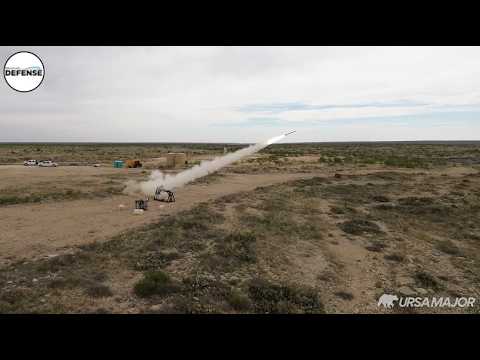
we've always done it this way. A new approach is already providing some exciting results. Faced with an urgent Ukrainian air defense requirement, instead of a lengthy specification, industry was given a two-sentence operational requirement. This gave them the space to innovate. As a result, the Raven ground-launched missile system was designed, developed, and delivered in just 4 months. And the total cost of the first eight systems was less than 25 million dollars. Similarly, RSMEs are small medium-sized enterprises took designs for one-way attack drones from paper to flight in 3 months with systems reaching the front line in Ukraine within a year. Deliberately limited technical requirements allowed companies to experiment, make mistakes, correct them,
and iterate quickly. This meant rapid acquisition of essential and effective defense tools that have both saved lives and allowed Ukraine to take the fight to Putin. Instead of doing the same old things the same old ways, we rose to the urgent and immediate challenge that faced us. And by pushing the frontier of defense innovation, we are creating and maintaining an advantage over our adversaries. We are also learning in real time in Ukraine. Modern warfare requires much shorter feedback loops. Avengers Lab, Ukraine's military breakthrough military AI platform, is doing just that. It takes combat data from the front line and converts it to hyper-accurate algorithms that are dramatically improving situational awareness and target identification on the battlefield.
The UK now has access to this data goldmine. And universities, researchers, and tech firms are using it to co-develop battle-winning AI capabilities in response. This illustrates a much bigger purpose, not simply to study the lessons of Ukraine after the war, but to connect battlefield experience to our innovation systems while those lessons still matter. And it is a striking feature of the relationship evolution during the war that we've gone from training the Ukrainians to being trained by the Ukrainians. The transformation of modern warfare presents Britain and America with an extraordinary opportunity, not simply to renew our defense partnership, but to help build an alliance fit for the challenges of this century.
Our partnership has been forged through generations of shared history, common purpose, and joint sacrifice. I firmly believe it remains the strongest and most enduring bilateral relationship anywhere in the world. But its future cannot run purely on the fumes of nostalgia. Collaboration on defense innovation can drive our partnership to new heights for the rest of this century. We've repeatedly proven that UK-US collaboration out-innovates our rivals. It's not surprising. We're home to the world's smartest minds, finest universities, and most creative companies. If we pool our resources, we can lead the development of defense technologies in drones, uncrewed vessels at sea, advanced fighter jets, and the use of AI.
If the last century of warfare was characterized by our soldiers standing shoulder-to-shoulder on the battlefield, the next can be defined by our scientists, engineers, and businesses working side-by-side in our labs, research institutes, and factories. But there's a bigger ambition here. Because it's not enough to simply out-innovate our adversaries. We must out-produce them, too. The ability to invent the most sophisticated weapons means little if you cannot manufacture them in sufficient quantities, replenish your stockpiles, or sustain your forces through a prolonged conflict. A prototype can demonstrate our ingenuity, but it is reproduction at scale that turns ingenuity into military power. The nations that prevail will be those that can innovate at speed, manufacture at scale, and sustain that production for as long as it takes.
That is the challenge we are facing across the entire NATO alliance. Because an alliance that can mobilize its armies must also be able to mobilize its industries. Our new Prime Minister, Andy Burnham, sees this as both a responsibility and an opportunity. Because as the threat environment requires us to deliver the biggest sustained increase in UK defense spending since the end of the Cold War, we have an opportunity to re-industrialize Britain, creating good, well-paid jobs in every corner of our United Kingdom. We are proudly backing Britain by buying British, seizing opportunities to buy from those who are creating jobs and growth for us, with us, in the UK,
including US companies invested in Britain. But there is plenty of work to go around, and frankly a challenge for all of us to broaden and deepen our defense industrial bases as sovereign countries and as NATO. It's why I have been urging my European counterparts in recent weeks about the need to avoid healthy competition becoming self-defeating rivalry. It makes no sense to pitch buy British against made in Europe against America first. It should not be an either-or choice. It should be an and also,
where all of us benefit in a way that strengthens our collective security as well as our national economies. Already the UK's active foreign military sales portfolio with the US exceeds 11 billion dollars. British industry produces around 15% of each F-35 through
more than 100 UK tier one suppliers supporting over 20,000 jobs. Through AUKUS, US investment in its submarine industrial base is matched by substantial British investment in our defense nuclear enterprise. Stronger domestic industries and deeper allied integration are not contradictory. The defining test is not where every component was made. It is whether our combined industrial base can give our armed forces what they need when they need it. And so we need to go further, make it easier for technology and expertise to cross the Atlantic. We need to open up our systems to innovators who have been historically kept out of defense deals. And by aggregating demand, we can give industry the confidence it needs to expand capacity.
Most importantly, given how often and how closely our militaries have marched side by side, interoperability cannot be retrofitted. UK-US integration can also serve as the model for wider NATO modernization.
For the United States, the UK is a supportive, serious partner. We are deeply integrated with you, profoundly committed to NATO, and strongly connected to European security and industry. The UK is the causeway across the Atlantic that binds together Europe and America, connecting American innovation and scale with growing European investment and industrial capacity. NATO remains the cornerstone of Western security. And we undoubtedly need a stronger Britain in a stronger Europe to build a stronger NATO. Now, I I there's been frustration here in Washington about Europe's reliance on American military power. Bluntly, much of that frustration has been justified. President Trump is not the first American president to demand that Europe takes greater responsibility for its own defense, nor have those demands been limited to Republican presidents.
But President Trump has brought a new urgency to that challenge, and he has made it impossible for Europe to ignore. The result is the most significant shift in European defense ambition in a generation. But I want to be equally clear about Britain's response. We are not stepping up because America has told us to. We're stepping up because our national security demands it, our responsibilities require it, and our capability equips us to lead. We also know that the strongest allies are not those who ask the most of America. They are those who bring the most to the alliance, and Britain intends to remain among the very strongest.
The UK is the only European ally to commit its nuclear deterrent in full to NATO. We have over a thousand military personnel in NATO command posts. We have taken command of Joint Forces Command Norfolk and the maritime and special operations components of NATO's Allied Reaction Force. Several hundred elite British troops have become the spearhead of NATO's highest readiness force, and the UK is developing NATO's next generation of long strike capabilities with our European allies. We will meet our NATO target to spend 3 and 1/2% of GDP on defense by 2035.
But in this age of insecurity, the ultimate measure of success cannot simply be counted in pounds and pence or dollars and cents. Defense spending is the measure of our commitment. Defense capability is the measure of our credibility. That means matching investment with modernization because while modernization without investment is impractical, investment without modernization is irresponsible. In times of our greatest peril, Britain and America have shown ourselves capable of achieving great things. We have stood tall on the world stage. We have been steadfast in support of our allies. We have rescued the world from tyranny. We have matched the courage of those who serve with the ingenuity of those who build. We can still do all these things and we will.
Previous generations built a partnership capable of meeting the defining security challenges of their age. Our responsibility is not simply to match it, but to modernize it. To make sure that Britain, America, and our allies continue to innovate faster than those who would threaten us. That is how this partnership honors its past by building
its future. Thank you very much. >> [applause]
>> Thank you uh Secretary Shapps for those excellent remarks. Maybe I could pick up on uh on Ukraine. Uh they're looking ahead at a very harsh winter in which they are now desperate to get ahead of Russia in the in their defense innovation cycle so that they can have uh more adept air defense. Uh you mentioned that now we're we're learning from the Ukrainians and I'm curious when you look at the UK defense industrial base, the European defense industrial base, how do you see Ukraine integrating into that as you're spending more on defenses, the defense industry is roaring in the UK. How do you incorporate the lessons that Ukraine is learning from the battlefield?
>> Yeah, that's a great question. Um the first thing I'd say is it's all Yeah. It says dead battery. >> Here. >> Um the first thing to say is that
without um understating the impact of the war on Ukrainian life and the toll it's taking um in terms of
>> [snorts] >> blood and treasure, this has been a strong year for Ukraine. The front line has barely moved. They're innovating a lot faster than the Russians. And the price that Putin is paying in
terms of Russian casualties and the economic disaster it's inflicting on the Russian economy puts Ukraine in a strong position. And it goes to that point I was just reflecting on in my speech, which is the Ukrainians have gone from being trained to being the ones who are delivering the training because such is their insight, their expertise, and their capability. And we we see in the body language, as well as the the actions of President Zelensky, Defense Minister Kamara, um even as they're fighting an existential battle for their own freedom, an active engagement in support of their allies, whether in the Middle East or elsewhere. So, I think that tells us something about the the role that Ukraine will play play in the future beyond the war as an ally who gives far more than they receive. Um So, for us um you know, we are um actively looking at what more we can do to um build our productive capacity to support the Ukraine war effort. Also, to provide opportunities for um the rebuilding of the of Ukraine and the
establishment of what I think will prove to be one of the strongest defense industrial bases anywhere in the world beyond the war. We just in recent weeks opened our new business center in Kyiv. So, we're all thinking in those terms. And um
you know, notwithstanding some of the challenges of recent days in terms of um the the relationship between Washington and Kyiv, I think it's been a reminder of two things. One is that American support in Ukraine has been significant. Uh and it has um made
I think a real impact in the Ukrainian war effort. And um we and the Ukrainians would feel the absence of that. And I think there is therein lies the proof. Um but also there is enormous opportunity for the US in terms of the support for Ukraine, the insight, um the defense industrial relationship, and what the future, you know, a time when the US is hot, rightly in my view, asking hard questions of allies. Um I think the US will find um in the years and the decades to come uh that Ukraine will contribute a hell of a lot to um American strength um both
in terms of military power, but also its defense industrial base, too. >> You sat atop the the National Health Service. Uh you understand that the the challenges of of funding social spending and investing in defense. Uh Marine Le Pen yesterday of the National Rally in France gave an interview saying, "Well, we can't afford France can't afford to support Ukraine anymore." How How are you balance How do you see balancing that trade-off of needing to support the health care of UK citizens as well as investing in all the things that are needed for defense to meet the the growing uh demands uh for Ukraine, but also for the force posture review that is coming out of Washington where we may reduce our our force presence in Europe. So, how do you balance that?
>> So, I think the prize for us is to align greater defense spending and our national security with our economic security which is built on um jobs, growth, and opportunity in every part of the country. You know, the one of the challenges for the UK economy which you know is in against a difficult global backdrop is doing really well. I mean, we we've just have published figures published today which show the first half this year the highest growth in the G7. So, against the challenging global backdrop, we're not doing too bad. But, a lot of our growth is still driven primarily by London and the Southeast. But, when I look at the um defense footprint um in
the UK, it is outside of London and the Southeast primarily and we are driving opportunities in places that desperately need them. And we have an opportunity to re-industrialize those parts of the country that have experienced de-industrialization. And not just the decline of local industry, but the decline of um social security as well um in terms of um
the condition of high streets and town centers, um public amenities, um people's ability to go out and do the things that make life worth living. So, um for me, obviously my job first and foremost um and the most important job um that there'd be fewer people around to complain about it if I get wrong um is to make sure that we deter our our adversaries and should deterrence fail, be prepared to fight and win. But, because we are investing more in defense and we'll continue to invest even more in defense uh we are able to support some of the Prime Minister's big economic and social reforms. Um jobs in every postcode and
and growth in every postcode and jobs and re-industrialization opportunities for the next generation. So, I think that is the that's the prize. And I'm not complacent by the way, about holding public support. No, the the public wants to see more defense spending in the UK. Um but that's not an unassailable position. Uh and so demonstrating to taxpayers the impact that their investment is making, both in terms of bolstering our national security, but also strengthening our economic security and our social security. Um I think that's that's the that's the prize. >> We're We're pushing against time. You have a busy day here in Washington. I'm going to ask one more question. Uh Prime Minister Andy Burnham has talked about rebuilding a bridge to the European Union, uh reengaging the European Union.
You sit at the head of the Defense Department. Is there a role there for the UK to play uh
in in the EU when it comes to defense? Or how do you see the UK's role in European defense going forward? >> Well, primarily through NATO, first and foremost, um and the strengthening of European NATO, I think is absolutely critical. But I do welcome the focus, the increasing focus that the European Commission is bringing on um the defense of the continent and defense spending and trying to galvanize EU member states. Um but this is the But this this conversation, this imperative is bigger than than the than the 27 members of the European Union. It involves all of us. And the UK has a leadership role to play. We are playing it. And we we have the intention to do even more. And to do that in different formats. You know, I struck recently, into your point about some of the politics of the continent, um recently um I chaired the meeting of the Joint Expeditionary Force um in Iceland.
Um it brings together those countries in the north of our continent that are particularly concerned around the high north, the north, and and um the Baltics. >> [snorts] >> And uh you look at our politics and our political outlook, um we're relatively stable. And I think we have we have a a an opportunity to be both the um the agile, forward-leaning um first responders of the NATO alliance, uh, but I think we we also have responsibility to to be a galvanizing force, uh, and the bedrock of the security of our whole continent, uh, because, you know, peop- people should be no doubt about this, um, Putin's imperialist ambitions uh, are not limited to Ukraine. And we see that with the way he is testing the NATO alliance every day and trying to divide the alliance. I mean, I I really can't stand the term hybrid threats and gray zone because it understates the reality of what those threats are for a public who find it hard to follow our jargon at the best of times in defense. Um, it is it it really is, um, sabotage, state-sponsored terrorism, targeted assassinations, mapping of underwater cables, and the and the intent to, um,
disrupt, potentially in a very catastrophic way, everyday life for our citizens. Um, so that's the context in which we've got to see this and why, you know, I I hope people, um, can see through our our actions, not not simply our words, the way in which the UK is stepping up, uh, with both our defense spending, but also the modernization agenda. I think it's really important that for those countries, and I think they are smaller in number now across Europe, who are still in a defensive crouch about this, and still resentful of the challenge to spend more that comes from Washington. Um, it you know, I'll just say to those countries who are still in that mindset, it's not about, um, uh, pleasing, um, President Trump, it's about acting in our national self-interest, the collective interest of our continent, and they might not have always appreciated the warnings that have come from the White House, but President Trump has been absolutely right about it, and I think history will thank him for it when you look at this period of history and the extent to which defense spending has gone up, and the and the, um, degree of alertness to to threat environment is just unrecognizable compared to where it was even just a few years ago.
>> Well, Defense Secretary Shrewding, thank you so much for for joining us. Um I'm sorry it's we it's so brief, but you have a very busy day ahead, and I want to thank you for for giving us the time. Please join me in say in thanking the secretary. >> [applause]
[music]