Lobsters
Genera for the Initiated: Inside Symbolics Lisp Machines
Comments
Transcript
Hello, my name is Philip, known to friends as PHF. I don't know if I actually know anybody in here
because it's all remote friends, but I'm going to talk about Genera, which is a Lisp machine
operating system developed by, or I guess perfected by, Symbolics. And the first thing is a PSA.
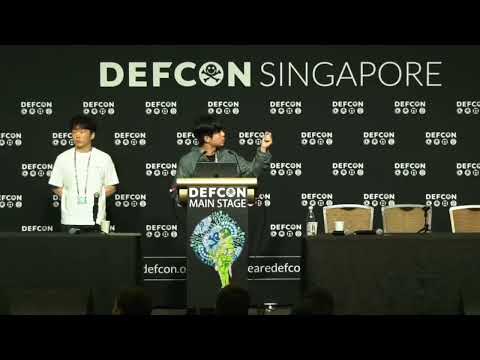
It's pronounced Genera 7.0. It's pronounced Genera. And I brought a Symbolics employee to
support the cause, the case, because people like to say Genera and other all kinds of
pronunciations. It's Genera as in general. So what's a Lisp machine? Well, it's a machine for
running Lisp. Lisp is a programming language. It's one of the foundational programming
languages of the, I guess, the computing era. So I don't know, like the talk is going to be
fairly high level at this point. So I'm sure there is people here that are Lisp programmers who are
like, all right, I'll sleep through this part. That is the Lisp's inventor or discoverer. It's
John McCarthy. And I really like this photo because, I mean, there's plenty of good photos
of John McCarthy, but that's McCarthy in Soviet Union. On a trip in 68, where he is a kind of like he, he visits a lot of Soviet towns and, you know,
meets whatever Russian, Russian professors. He has a, so there is, there is a Russian researcher,
Russian researcher Yershov. He is one of the computer science visionaries, but from Soviet
Union. Like Knuth credits him with the,
you know, invention of block diagrams as a way of notating code. So when, when Knuth introduces it to the
West, he actually takes it from a translation of a 1950s Yershov paper. So Yershov, he reaches out
to a lot of academics across the world. Like, you know, he's got a long relationship with Wirth
and he has a long relationship with McCarthy through, you know,
Iron Curtain. He travels there, they travel there, they travel back. So that's, you know, whatever, McCarthy drinking with, with the Russians.
That's McCarthy again, looking very bitnik in a group of essentially Soviet visionaries.
That's McCarthy, that's in the eighties when, when he came back for, for his last trip and is with him.
Yeah. Yeah. Yeah. Yeah. Him, him with Yershov. And of course, you know, they're sitting under birch trees, very Russian.
So what, what was McCarthy's invention? Oh you know I have another point about this. So McCarthy's parents, how, how does he what's his connection to Russia?
I'm Russian. That's why I'm curious about this stuff. His parents were communists, like members of the US, whatever, American Communist Party,
Hardcore Communist Party. Yeah. Hardcore Communist Party. Yeah. hardcore communist so he grew up speaking russian was a strong soviet union sympathizer
and this photo is of course taken on his second trip in 68 and if you know your history you also
know what else happened in 68 soviet forces soviet tanks were sent into czechoslovakia to
suppress the uh protests there and it just so happened that mccarthy was on a trip through
czechoslovakia at the time uh so when he when he comes back he um writes a letter when he goes
he you know like he passes through vienna he writes a letter to the director of the
uh stanford artificial intelligence lab uh and he uh he's rather shook and it's a kind of a
turning point his life uh from that moment on he becomes a hardcore uh republican he just kind of
completely distances himself from soviet union and and i was always curious about that story
because i was like why is there was no lisp in soviet union considering mccarthy's connection
to the country uh so i mean like this is the paper that mccarthy publishes i mean about lisp
this is a 1959 our ai memo uh pre-print before the famous paper where he essentially describes the essence
of lisp and i like the the ai memo because it gives you the eval function the core of lisp
on a single page and you can see that it's you know half typed half squiggled
um and uh it's a it's a it's a it's a it's a it's a it's a it's a it's a it's a it's a it's a you know you can you can see the entirety of lisp basically on this one page uh it's a um it's a it's
called later was called a meta circular evaluator for lisp because it is defined in terms of lisp
so you know you have eval uh it evaluates an s expression which is just a list
and it looks at the first element of the list and it looks at what the symbol there might be
and then depending on what symbol is it performs some kind of function um and that was you know like
kind of like that's the entirety of lisp as it was envisioned by mccarthy and it was sufficient
to implement uh on a you know on an actual hardware uh and you you know you can see that
something like quote which prevents the execution of the lisp of the list is uh simply takes the
rest of the list and then takes the rest of the list and then takes the rest of the list and then it's kind of like you know removes the tail and then takes the head uh and then if you go and see
what the first is well it's defined in terms of first again but you know you can reason about it
but if you're trying to implement it you uh drop a level down um so yeah this was this was 59 uh at
the time of course um you know all the languages are really low level uh so this was a significant
conceptual lift over what was available at the time uh so the language spreads through you know uh mccarthy's at
mit uh what was to become uh ai lab uh artificial intelligence research lab um was called project
mac at the time was funded by darpa um and then uh um you know like obviously it's being developed
and um worked on at mit and then they uh it spreads to other
communities to other researchers and uh um well what's what's the main issue with lisp at the time
i mean all the systems are time shared so you're running your list of interpreter on a system
that's shared with other people and uh as you can see well you probably can't see but uh lisp
is one of the first languages to not burden programmers with explicit memory management
which also means that as it's running because there is no um explicit memory management it
generates a lot of garbage um so in order to collect the garbage uh i.e structures that have
been allocated but no longer needed uh you need to invent a solution for that mccarthy's solution
uh who is also the inventor of the solution is a garbage collector uh it's a special piece of code
that travels the memory and collects the unused code
uh well if if your lisp runs away it generates a lot of garbage and a lot of resources and it's
also you know there's a lot of recursive uh kind of like the the essential algorithms uh recursive
uh so um a runaway lisp eats up all the resources on the time shared system and people complain um
so what's what's the vision well in 68
actually i think my got my timing wrong but uh engelbart does a presentation yeah correct 68. engelbart does a
presentation um which is called you know the mother of all demos because it during that
presentation he shows uh community at large uh the first uh concept for a workstation
which is you know a personal monitor personal keyboard personal mouse and he has an extra device for pointing and selecting uh and the system is
interactive and uh the system answers to a single person and of course that's revolutionary at the time when
the bulk of your input is index cards or uh uh whatever um uh type terminal yeah tape and uh
select tricks i'm trying to come up i forgot the name teletype um so you know the idea spreads
engelbart influences uh inspires uh xerox park xerox
park research into personal workstations uh meanwhile at mit they're also doing their own
development so this is 1972 uh one the the the person who essentially first built lisp machine
uh tom knight uh that's his uh night tv uh with a keyboard and that's the system that
is being used uh as a kind of a proto uh the essential way in which you interact
with the main system at mit which runs pdp10 in order to um so it's called night tv because
it's literally just a tv converted into uh into a terminal i mean at the time we know how to bend uh
magnetically um particle fields so we can you know like we can do it with an oscilloscope so why not
do it with a tv it's the same principle that goes into i don't know nintendo entertainment system in
the 80s but but you know so the those tvs are connected to pdp11 so you need a separate computer to
actually drive them and provide the memory and all this stuff uh and you can have up to 64 of them i
believe so they're connected to a pdp11 and then pdp11 talks to pdp10 which is where their actual
operating system is but this is you know this is early early experimental research into getting a
personal workstation um
so this is uh richard greenbolt greenblatt and tom knight um they are working you know this is
them demonstrating a kind of like a stage for for a list machine uh so what they
what they want to build and what they end up building is um you know like if you have this
technology you can drive in that direction of building a personal station personal workstation
for a lisp um and uh they are inspired by xerox park they're inspired at by engelbart and that's the explicit
goal they want to build a personal workstation that you can run lisp on and one of the reasons
for that is that you don't want to step on anybody's resources you don't want to run the
resources of other people uh of course there's a keyboard there's keep i'm sure there are keyboard
poachers in the audience who uh heard jenner and they want to see a scene where they can see the symbolics keyboard that's a symbolic keyboard uh and there is you know there's a lot of conventions
here like why is emacs which comes from this lineage uh control is so prevalent well it's
because control is next to spacebar and of course meta is the original use of the extra key for
modifiers which is where we get alt and option and all those other options all that other functionality
from um
so that's uh that's from uh knight's um research paper as it's his dissertation where he describes
the architecture of the list machine and he contrasts the alto approach which is the xerox
park approach of individual computers connected over ethernet they're all localized and then you
know they're connected to arpanet so that's your little user office and then there's other offices
they're connected to the internet they're completely separated from each other
he contrasted to the lisp vision which is that you have
uh you know like you kind of have a more networks more distribution distributed solution so you know
you have a file computer so it's a shared storage for everyone as opposed to each individual storage
and then there is a you know the pdp serves as a router to the outside internet
um so it's more and and the goal is explicitly collaboration um you want to be able to access
other people's files other people want to access your files and thus there is interaction going on
um and it's congruent with mit's uh kind of like a open freewheeling internal approach where you
know if you want to if you want to mess with somebody's files you mess with somebody's files
there are no real restrictions until much later so that's the architecture of a lisp machine um the original cater uh lisp machine
i'm not necessarily going to go into the details but you know you can you have the uh
the keyboard connected to uh one amount of multiplexer then there's a
on your cpu sits on one bus and then on on the other bus you have your variety of peripherals
it's it's arc it's uh uh accidental to the reality of the time this system is also microcoded
um i.e um the the instructions are wide and in order to and each instruction essentially
gives you the entirety of possible um manipulation of the internal state of your cpu uh so it's the
the the the nature of the instruction is fully dependent on where the different parts of the
instruction are physically wired to so you know you you flip a bit and then there is a relay that
will switch it to the other direction programming something like that is of course pain yes
uh so the solution to uh programming instead of programming indirectly use something called
microcode which is essentially assembler for that sits a layer above
your your hardware and microcode is what provides you with a with the bedrock of your list machine
this is what the lisp then runs on top of so it's a kind of a very fancy assembler
and the purpose of using microcode and the purpose of structure architecture like that is of course
optimizing your system for running lisp you want some rudimentary parallel execution you want some
rudimentary structure packing in memory you don't want to put all of that onto the lisp
side you keep it on the instruction side that provides significant speed up for running lisp
at the time given the limitations of the hardware at the time like for example there is a cute hack
of parallel execution where a single instruction can simultaneously or a single underlying
instruction can simultaneously do a type check and do the actual operation so if you're adding
two numbers together you can compute what the result should be and you can also check if the
what you're adding is actually numbers so if they are numbers you just produce the result in a single
instruction but if they're not numbers then you bail and you ignore the the addition so your
your speed up is 2x uh with the hardware at the time all the time
and there are other cute hacks like that but i'm not going to go into it
but you can use them for running the lisp and making your own lisp
so how do you use them well the whole thing is you know like the mit starts producing them hand
building those list machines um they built about 100 of them they are hand-built i don't know if
they're hand-wired but it's a lot of work and mit cannot supply enough of them uh they are not really
in the business of building computers uh and this is end of 70s so we started at the beginning of 70s
70s, they're building it. End of 70s, they're like, we have a success on our hands. So the whole MIT
lab decides to quit and start a company for selling the hardware, selling Lisp machines as
a hardware. And of course, you have ARPA funds coming in, massive, and AI is the vision at the
time, of course. And you want to build machines for AI. So a whole bunch of MIT lab people quit
and start a company, Symbolics. There is, of course, immediately a schism. There is another
company started in parallel because, I don't see him on the list. Well, Nofsker is there,
but I don't know. I forgot who quit. Well, I can't. Oh, yeah. Greenberg, I think, went to LTI.
Well, and a lot of these people are, of course, so Russell Nofsker, the CEO of Symbolics, is the
director of the AI lab for a decade. And the other names are computing demigods. Tom Knight is there.
And I don't know. I don't know. I don't know. I don't know. I don't know. I don't know. I don't know. I don't know. I don't know. I don't know. I don't know. I don't know. I don't know. And, you know, David Moon. These are the people that have invented Lisp and invented modern computing
indirectly as a result of that, as a result of this work. So they start Symbolics. They start
selling Lisp machines. They first sell the original Tom Knight design. That's LM2. And if you have
ever seen how... cater system looks you can see that this is actually uh not generalized not symbolic so
yes it's whatever mit was producing and at this point they're still sharing research with mit and
with other um uh with uh other uh lisp companies and then of course they immediately want to
commercialize it which is the goal so they build the 3600 series it's a evolution of the uh
of the tom knight design they widen the instruction set they increase the memory
they build better hardware uh and uh and that's that's where they are and of course they improve the operating system
uh so i guess at this point i'd like to actually do the
demonstration of the system so i'm going to do a little transition
so of course you know it's a little bit of a transition it's a it's an operating system designed in the uh this the scaling question on on this thing is
not particularly uh well thought out for for obvious reasons uh so i'm running uh i'm running
um as symbolics progressed they build hardware machines and then of course everybody knows about
the ai winter uh the darpa funding um dried out dried up and then of course symbolics made a lot
of questions about the AI winter and then of course symbolics made a lot of questions about the copia and they built a bunch of fashions and they printed represented thousands of fashions and then of course i think that there was an issue with that basically the 답y card for the
ant marriage and so i'm just kind of digging deep a little bit uh into how the banks are normally
raised where officials who can buy間 on hat them but there isn't any reason to be worried about
unhinged access and fake unseruz for uh people so this is this is kind of at this point you know
when we're получаетсяagt that um you know for ransom you have to do a lot of things right if you without to be lost thecier activating that uh of course thoughиж etiquette are things you obviously have to be careful about right so in the device y'know how the case works distribution uh the you know more than five minutes um you using their microcode capabilities to actually execute it sufficiently fast.
And the modern updates of the emulator, or the Lisp machine is called VLM,
and the modern updates of it use assembly to essentially emulate the instructor,
to speed up the instructions. So each instruction is implemented in assembly, and it's sufficiently fast.
I mean, it's definitely faster than the original hardware on anything that you can run it on.
This is kind of messy, so I'm just going to...
I'm just going to set it up.
So, you know, in the beginning was the command line.
The interaction with the Lisp machine goes... Goes through a Lisp listener, i.e. a surface or interaction medium
through which you enter Lisp S expressions. So you enter Lisp code, and you get results.
This is how it was designed in the original Lisp machine. This is how it's done on Genera 2. So, you know, we can do a fresh line.
So I've just defined a function, and I can call the function.
It returns hello world, and then it also... It prints hello world, and then also returns the symbol that I printed.
So you can obviously write any code you might want,
and the manipulation of the system is also done through typing Lisp commands.
That's the original vision. So everything... Everything... Everything... Everything... Everything... Everything... Everything... Everything... Everything... Everything... Everything... Everything... Everything... Everything underneath is Lisp code. It's Lisp code all the way down. So anything that you might want to execute on a Lisp machine is available to you from a Lisp listener.
And, of course, that's kind of like the foundational vision,
is that you want your machine to be so flexibly interactive
that you don't need to have any additional ritual
in order to... get useful result out of it. I mean, you can use it as a desk calculator, and I know the people that continue running their beloved symbolicses
into early 2020s, they still sometimes use it as a desk calculator. And I'm talking people that started using it in the 80s. And, you know, you can do things like get the 2 to the power of 1024.
My favorite one is that you can print it as a text,
which is a really, really long verbalization of that.
But, of course, Genera is then a commercial product, so it's designed for actual users,
and including power users. So at the time, the vision is that the separation between the... kind of like a Lisp input and the power-user interaction
should be very thin, but there should be sufficient amount of... hand-holding for the power-user to be able to do things.
So a Lisp listener also takes textual commands
that do fancy autocomplete. So, for example, if I want to clear it out, I type clear out history, I'm only typing the first few letters, it gives me a command. And that command I can now execute, it clears the listener. The command underneath is still a Lisp code,
and there's a Lisp convention where if you type a plus in your listener, you get back the command that you immediately typed before.
And if we do a plus on a textual command, we get back a piece of Lisp code that was actually executed underneath.
All right, well, what... So the whole thing, besides... the fact that it's Lisp with additional... kind of like layer on top, the whole thing is interactive, it's designed to be interactive with a mouse and a keyboard. So, you know, we can re-execute this command... No, can we re-execute this command?
We might be able to re-execute this command. I lied.
Let's show directory.
Can we re-execute this command?
Yes, we can re-execute the command by clicking on it.
So what else can this thing do, I guess? Like, what can a Lisp listener do? Well, I have a... I have a command called netrunner says...
Well, so I tried to run a command,
but I don't have an image. So in order to load... So it's a command that outputs a little picture and some text, but as I'm trying to run it, it tells me, well, you can't do it because there is no picture.
Well, I get another listener, and I'm trying to load a picture. So I can switch between listeners as I'm solving tasks. And I'm saying something like, well, show directory, and I just know where it is. But it happens to not be on this computer because that's the vision. It's a network. It's fundamentally a network system. So this computer, if you look at the top, is called Neuromancer. And the computer where I know that the picture is is called Wintermute. And it's a Unix machine. So I'm connecting to a Unix machine. I can see it by the path. It's slash L slash talk. So I get the output of that.
And there is files in there.
Well, so I want to load my Neuromancer.png,
which was missing. Well, how do I do it? Well, there is a command for that. It's a read image file. And because everything is interactive, so that's how the listener is designed, I can then click on Neuromancer.png, and that will just get pasted there.
And the interactivity is contextual. It expects path, so the thing that I'm... Nothing else is highlighted, just other paths. So what's the format? PNG. Well, it doesn't know how to load a PNG. Well, so that's the next step. Well, what do we do now? We need a system, i.e. additional code that will allow us to load this PNG. Let's load a system. I just happen to know, of course, what the systems are. It's a...
Normally, a Lisp machine will be preset with the system that you might need, but, you know, for the purposes of the demo, I'm loading everything explicitly. So read image file, Neuromancer, and this is PNG. So it takes some time, even on a modern machine. So the PNG reader is actually modern common Lisp code and slightly backported, so it's not really designed for a Lisp machine. And then I switch back to the other...
I switch back to the other...
What do you call that? Other listener. And I can... You know what? I'm just going to abort it. I'm not going to be fancy. I said...
Well, it's supposed to say things, but, of course, it doesn't, because it's an interactive demo. Well, what do you do on a Lisp machine? You edit the function definition in order to actually fix your problem.
So what's the function? Well, we can discover the function, of course, using Lisp. There is a convention for...
Well, a convention is that you call your interactive commands by their... You call the underlying function by the interactive command's name. So, you know, we can try and look up where the function is using Lisp commands. So we found our function. It's a user.com.netrunner.sys. And then I can bring up an interactive menu to then interact with this function. There's a variety of things I can do with it, but the one that we're actually interested in is if we want to edit it. Which is going to bring us into the pipeline of this thing.
And, of course, that's Emacs. The Emacs is part of the Lisp tradition.
This is its version called Zemacs. It's a specifically general version. But it follows all the standard Emacs conventions. The key bindings are the same. The interaction mode is the same. And it's fully built into the system. So if you want to send emails, or read the news, or anything like that, you will be using Zemacs. And, of course, editing Lisp is done using Zemacs.
So, color is white.
Let's see if... Oh, you know what? I think maybe it wasn't reevaluated. Let's try this again.
Meh. Oh, there you go.
So you have an... You know, your listener isn't just a textual medium.
It's this interactive thing that you can do a variety of outputs into. And, of course, this is a mixture between a picture and a text. It's overlaid and the bubble is adjusted.
I wonder if this will break. Eh. Wait, I can't do it this way. Well, I'm not gonna do it in a demo. Let's do Ctrl-U-10.
The small screen is rather annoying. So, you know, the bubble adjusts. Eh, really, really cute code. But... So that's your listener. That's the thing that lets you interact with Lisp
and send your Lisp commands. And it's kind of like where you are... your main input into the system. So let's see. What are the other interesting things that can be done? The...
Let me think for a second. So, like, for example, let's talk about the system loading. I've loaded a system prior, which is PNG read, which is the thing that I wrote. Well, how does that process works? Well, it's a... it's a twisted maze of passages all alike.
I... It's an indirection, above indirection, above indirection in order to support this whole networking paradigm. So, system definitions... This is a kind of, like, a very brief tour. They happen to live in this directory called sys-site.
The name sys-site is a virtual name. It's not actual physical name. It's a special directory that maps to a real directory. And you provide those definitions. You provide what the translation is using a file in your sys-site called the... the... whatever the first... the host and dot translations. So, if we look at the translations for the PNG read, we see that the physical host is actually called winter mute, i.e. not the machine that I'm running on. And the translations are the following. If it's a... If it's PNG read, then it's this. And if it's PNG read patch, then it's this. And if we do show directory, we can do, you know, PNG read, PNG read, and that's gonna show me what those contents are.
So, that's one level of indirection. Instead of explicitly specifying where... where the system lives or where the files live, you... you kinda have this... this extra layer. And then, of course, the other part is
the PNG read system itself, which is... but it's not this... it's the definition of the system. It's a pointer to where the system lives. So, if we look at the PNG read system,
we'll see that the system source file, and this is the second line,
is pointing into the PNG read, PNG read directory that I specified. And it's a file in that directory called sysdeco. The indirection is deliberate because that gives you... a way to satisfy this whole networking story. You can store files here, you can store files there, you can store it on any of the machines within your system, and then, as you bring things up, it all gets automatically resolved. And, of course, the downside, if you're doing any kind of Lisp archival work, is that you'll find a tape, let's say, you found a tape called Square Enix Final Fantasy 7 Original Symbolic, and you can see that the tape is in the original Symbolics models, right?
Like, that's what it says. And then you open it, you restore the tape, and everything's there, all the support infrastructure, all the support files, and then you look at the system definition, and it just so happens that the models themselves that you're looking at are pointing to somebody's private machine that never got backed up.
And, you know, like, you can have tons and tons of tapes, and then you look at the systems, and the actual system definition will point to 10 different machines within the current site.
So, there is a positive aspect of it and a negative aspect. So, how is this all managed? You have something called namespace, which is later used because this whole thing is so networked, it's part of the original Internet. So, namespace server is also used as one of the earliest DNS servers, to host one of the earliest domains, Symbolics.com. But we can look at the namespace object,
which is a host, let's say, Neuromancer. That's not what I wanted to do, sorry. Edit namespace object, host Neuromancer.
And we get a namespace editor, which gives us all the things within our site, all the things that are connected to our network system. So, when I'm trying to connect to Winter Mute or the name of my own machine, all of that is specified in the namespace editor. So, we can, for example, edit other objects. There is a host called Winter Mute.
So, we're editing right now, it's host Neuromancer, which is this very host. The machine type, is VLM, so it's this emulator. And there is various, you know, there is the network address, it also has a chaos address. But we can look at other objects. This is the actual, this laptop that this VLM is being hosted on. It's a host Winter Mute. It's Linux. And it has this address. And you map out your entire environment. Everything has names or nicknames and then that's how you do that extra layer of connection. You say, okay, this definition lives on this machine. It's a file server. This definition lives on John's private machine and you are never going to recover it.
And other peripheral objects are also there. Like, for example, a printer is there. I followed the Symbolics Convention and called it Pravda. They really like their left-leaning terminology. So this is a printer. This is a definition for the printer. It's accidental to how Symbolics does it, but it just so happens to live on host Black Forest, which is this machine. It's the Mac, which is also within this network. So if I want to print something,
well, there is a default printer, which is Pravda. And I specify on my name server, on my main machine, on my main server, that the default printer is Pravda. And then if I need to print to a printer, it does its internal resolution, finds the printer and does the print. Well, what can we do? Let's print something.
Let's just print this buffer. The command is called hardcopy buffer. Very old school.
Of course, it fails in a very Symbolics way, but that's not a problem because I've seen this failure before and I just ignore it. And what that does is it gave me a printed document. How this was done, it's a Python process that pretends to be an LPD server, but, you know, it's essentially a real server.
And I can go to listener and I can ask it, show printer status maybe.
And I can ask it for the printer status and it will actually tell me that it's printing right now because in order, that's a cute hack, in order for it to, you know, process to the next thing in the buffer, I actually need to quit my preview and then the status now is that it's ready. But that's, you know, that's sort of like, that's the Symbolics site. You have all these machines. It's a completely heterogeneous network. Most of it is Lisp machines, but there's also Unixes as Unixes become more and more popular and the whole thing is specified
and then you can talk from anything to anything. What other cute things we can do with this thing? Well, there is, of course, Lisp is not the only thing that runs on a Lisp machine. And just as an aside, there is, for example, tech subsystem, which I'm quite fond of. You can do Knuth's plane tech on Symbolics. I print my receipts this way.
So we can load tech
using the same principle. I mean, normally, it'll be loaded in the environment, but as a demonstration, we're loading a system called tech. It will run and do things
which are of Symbolics nature, lots of exceptions, but they all somehow magically work out. And what that gives us, it gives us a command tech in the listener, which we can now use in order to compile our tech files.
And then, I actually need to, I realize I need to patch the tech file because it was for another
version, not numeric. What did I do?
This is my demo tech file. There was an error in it that I was testing, but we can now print that file.
Let's see if maybe I can.
I would like to, so I re-ran the command because everything within the lisp is interconnected. Tech,
as I was editing the emacs buffer for foo.tech, it got placed into a shared cubbyhole.
And now, as I'm running the tech command, it already knows that there was a tech file in a shared cubbyhole. So I don't have to think about what file I just edited and try and pass it back to the function. There's a lot of interconnectivity like that. It's sort of like a completion across boundaries, let's call it this. And so the command compiled my foo.tech
and the output was written to foo.dvi,
which is, you know, the tech rendering format. And now, I need to switch to it. Of course, there is all kinds of other apps and there is a central system for switching between apps. And there is a help because there is help for everything in the symbolics world. And there is a whole bunch of commands here, but I forgot how to switch to dvi-previewer that got introduced there by my tech system.
So it's a select forward slash.
So I've switched to a dvi-previewer, which is an actual application. It's not a listener. It's not Emacs. But it is sort of like listener-like because that's how they build their apps. Everything starts with the listener. You write code. Maybe it's a hack. You evolve your hack. Now it's a rich listener thing that you can then wrap with extra windows and extra functionality. So the listener here is where the cursor is
and where it's blinking. And it gives me hints. Like I can execute a bunch of commands. So let's open dvi-file.
And of course it knows what the dvi-file is because I just compiled it. Same cubbyhole. And I get tech-preview.
Let's do maybe a little bit bigger.
So, you know, these are familiar tech-ish conventions.
You know, tech is obviously rendered in a fancy way and you have your mathematical formulas and it's a dvi-file.
I can of course hard copy it and that will do a print for me.
Which is sufficient, by the way, for modern printing too if you're sufficiently crazy.
So how is this actually being executed? Well, if we go back and introduce this error that I had there before
and attempt to compile that tech-file again
well, you know, tech itself is going to tell us well, that's an error. Obviously, there is an undefined sequence
that it doesn't know what to do with. Well, in a Lisp, of course, at any point we can drop into a debugger.
I'll try not to mess it up. Right, breakpoint. So there's a... there's a button we can press to go back to a listener and then from... and the listener is executed in the context down stack from where we are at the point of the break. Which means that from here if we were to introduce some kind of error like a break call
we get a debugger. And knowing debugger commands we can do control B
Eh, it's messy. Control B again. Which will show us our very long stack trace.
And the last thing is the com... or, you know, the bottom of the stack is the command loop evolve function which is where I called my break from. The top of the stack is the process top level which is where the whole thing is running from. And then there's this long chain of things
but these things these little functions here in the Lisp pipeline are actually Pascal.
It gets compiled into
Symbolics bytecode but you can then mix and match your execution
and it's not just mixed and matched as a dynamic library it's mixed and matched as a... as a... what do you call it? As a... actual thing that you can also debug and you can see what... what the state of it is and you can look at its... control D F maybe control C F whatever. You can look at its... at its source and it's all within the same structure.
I have ran out of time. There's of course all kinds of other things to talk about or to demonstrate but this is about where... this is kind of like a... dipping your toes into a symbolic system.
It's... like I said it's a maze of passage twisty passages all alike. You go further and further deep in and... there's more and more things. And of course the flip side of that is you know like people... preemptively why did symbolics fail? Because this is too much fun. There's an... there's an internal email that... I was reading and it was something like it was one of the managers complaining about the internal state of symbolics and the email basically was like all they do all the time is tweaking their Zemax configuration files.
It's a kind of like you know like if it's a... it's not a bicycle for the mind. It's more like a... I don't even know what to describe. It's like LSD. It's not just a bicycle. You... you can go into that world and construct your own... construct your own sand castles and everything's very flexible, very dynamic. But you also need to kind of like deliver product at the end of the day. And I think that's... that's primarily where they ended up. It's kind of like there is almost too much bicycle if there is such a thing. And as you saw me interacting with it I mean like I will also take questions if there are any questions at any point.
Yeah, there's a... you got it... you got to talk into a microphone. I was informed. Because your question will not be heard otherwise.
So how does using Lips compare to say Claude or ChatGTP or...
It's sort of like our... I would say that it's... it's similar. In a sense that... but like it's similar and different. It's... it's a different approach to AI, right? Like the Claude will... you give it signal and it extrapolates your signal. So you don't really have a very tight control over your signal. But this thing allows you to have a very, very tight control over your signal. But because the control is so tight you don't really span out as far as Claude would. It is significant accelerator.
And the architectural approach is also a significant accelerator. Because you can reach any part of your system and because everything is so flexible and dynamic and because you have machinery for generating code for you you end up making very rapid strides.
But like it's... it's very similar to Claude also in the sense that you can easily slop. And slopping is way easier than proper engineering. I mean that's why... and I mean like in the Lisp... in general but in a Lisp machine. And that's why they call it a big ball of mud like a Lisp system. It's a derogatory term from back in those days as in like you solve problems in Lisp by slapping more, touching from the distance functionality and all this other stuff. But of course there is fundamental limitations to this approach. Maybe Claude will allow us to discover how to resolve those limitations.
But we know that the symbolic expert systems
they went fairly far which is what these machines were primarily for. It's a kind of a complicated decision tree
for answering questions. Oh yeah, it's a question talk.
But you know like the promise of generalized artificial intelligence never arrived following the symbolic paradigm. So that would be the answer. I can rant about this question for a while but that's about... that's about the scope of it.
Thank you.