The True WWII Story Behind the New Jimmy Stewart Movie
Transcript
Machine-transcribed by YouTube. Expect errors in names, commands and version numbers.
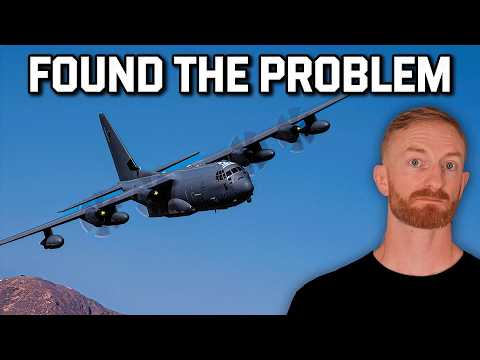
Just 32 years after the very concept of military aviation was born, two legendary characters found their way into flying service for the US Army Air Corps. One was a new heavy bomber that boasted a high-set Davis wing that allowed for both pretty significant fuel storage and pretty efficient flight to enable strategically vital long-range bombing missions. It just also happened to be less stable, less sturdy, and a lot harder to fly than most of the other bombers of its era. It often couldn't fly as high as even older bombers, leaving it more susceptible to ground fire. And because the aircraft lacked any kind of hydraulically assisted flight controls, its pilots had to very literally muscle the aircraft into formation. Its controls were so taxing that pilots likened flying the bomber to driving a Mack truck without power steering or power brakes. With modern pilots who specialize in historical aircraft like Robert Pinkston describing it as, quote, "One of the hardest production planes in history to fly."
Now, that bomber that took nerves of steel and biceps and something even stronger to operate would go on to become the most produced American military aircraft of World War II with another plane rolling off the assembly line every 63 minutes at the peak of its
production. And some 180,000 men riding into the fight inside its frigid and frosty fuselage, accumulating
more than 313, 000 combat sorties, dropping more than 630, 000 tons of ordnance on targets from Berlin to Okinawa, and racking up wartime accolades and tragedies
sometimes in seemingly equal measure. Few aircraft legacies better reflect that juxtaposition of beauty and brutality in war with one mission seeing
no fewer than five bomber crewmen awarded medals of honor for their bravery under fire. And another mission seeing no fewer than 54 aircraft lost in just one day.
Now that bomber, you may have already realized, [music] was the B-24 Liberator. But what about that second legendary character that entered service that same year? Well, a lot like the B-24, his legacy also reflects that juxtaposition of beauty and brutality in war. Just like the B-24, his physical specs left a lot to be desired. First, being turned away from the draft for being too skinny to fight before proving his slight frame had what it took to operate that unforgiving bomber and eventually leading entire formations of them and their men not just into the fight, but safely back out again. Now that man, that pilot, was never even supposed to see combat, but he chose to fight because he felt his country needed him and because he felt like he could make a difference. And he also just so happened to be one of the most famous people on the planet. So, let's talk about Jimmy Stewart and his bomber, the B-24 [music] Liberator, as they fought in real life and as they're depicted in the upcoming movie Jimmy. I'm Alex Hollings and this
is a Jimmy Stewart edition of Air Power.
Imagine for a minute that Timothy Chalamet won an Academy Award for Best Actor this year and instead of going on a victory tour on the talk show circuit, he dropped everything and just showed up at basic military training. Imagine if he failed his first physical and was actually turned away from service for being too skinny only to come back and try again Like, Captain America, but without the performance-enhancing drugs. Then, imagine if 2 years from now, we heard that Chalamet had become a captain, tasked with flying the B-21 Raider through some of the most intense air combat that this world has ever seen. Imagine if stories bubbled to the surface about the Air Force pushing Timmy toward a safe public relations job, but that he'd rejected it in favor of flying those combat ops. That he'd quickly developed a reputation not just for being a skilled aviator and pilot, but as an incredibly competent mission planner, leader, and formation commander. That he refused to let his service become part of a marketing campaign aimed at making him a bigger star, even going so far as to ban the press from coming onto the installations that he flew out of. Imagine if a story about Chalamet's service started trending on X or Twitter or whatever you call it, TikTok, YouTube, Reddit, and all the rest, about the Dune star putting himself at direct risk, opting to circle back to strike a target with his bomber despite being under heavy ground fire and while being actively engaged by enemy fighters, earning himself a Distinguished Flying Cross in the process. And then we found out that IT WAS ACTUALLY ONE OF TWO THAT HE'D received for his combat service. And then after 4 years of fighting imagine if a now much older and much more seasoned Chalamet returned from war to a Hollywood career that had really gone stale through his own volition. Now, a colonel in the reserves with double-digit combat missions under his belt, imagine if Chalamet struggled under the weight of knowing that well, only 10 aircraft were lost under his command, which was a genuinely impressive feat at the time.
That did still mean that he'd led 71 young men to their deaths, and 25 more
were captured by the enemy. Imagine if those losses were keeping Colonel Stewart up at night. If the things that he'd seen and the things he had to do in the cockpit of his bomber had fundamentally shifted his perception of the world and of his place in it. As that darkness of war crept in and shaded the brightest and most marketable parts of his Hollywood personality. And then imagine if his internal judge to position of darkness and light. That exploration of depression and guilt and earnest hope all manifested in a return to the big screen that bombed at the box office like a B-24 over Germany. Only to eventually be recognized as one of the most culturally significant films of all time.
Now, imagine if all that was a true story. Just one about a different movie star. One who was born 87 years before Stewart. And that you may have only seen in that one box office bomb. Well,
you don't have to imagine because that really is the lived story of James Stewart who left a booming career in Hollywood to serve his country just as the United States was being thrust headlong into World War II. Not as a publicity stunt or as a PR move to rehab an ailing career. Not as a token celebrity selling war bonds. But dead set on just being one of the guys. These days, it's hard for me to imagine a world where celebrity isn't treated as the only thing that matters. And based on my research, it seems like a lot of people felt that way back in 1941, too.
But not Jimmy Stewart. His story is so different from my cynical view of popular culture in the modern era that I have to admit I had trouble figuring out how to even approach it. But luckily, I was able to get some help in the form of the cast and crew of the upcoming movie about Jimmy Stewart's path from stardom to combat and back again, Jimmy, that hits theaters on November 6th. In fact, here's the film's writer, Justin Strawhand, to start. >> It is such an amazing story. It feels like it's made up, and then you go and dig into the details. Uh Hollywood's biggest actor forces his way into the military because he believes so much in service.
Um serves honorably, courageously, with
outstanding distinction, rises to the level of Lieutenant Colonel, flies 20 combat missions, comes back to Hollywood, nobody remembers who he is, and the only job he can get is making this weird little movie, which eventually becomes It's a Wonderful Life. >> In a lot of ways, 1935 was a seminal year for Stewart. It not only saw the release of his first major Hollywood picture, The Murder Man, but it also saw him earn his private pilot's license, which is pretty neat even these days, but back in the '30s was practically unheard of. Bear in mind, this was only 32 years after the Wright brothers' first flight, making Stewart one of fewer than just 6,000 American civilians
to earn that distinction. By 1939, Stewart had accumulated some 300 hours of flight time already, and he was increasingly convinced that the United States would not be able to sit out the conflict erupting all over the world for long. The US government seemed to agree, establishing the Selective Training and Service Act of 1940 to institute America's first-ever peacetime draft, which happened to coincide with the US Army Air Corps' newly doubled efforts to expand its combat aviation forces. But meanwhile, Stewart's latest movie, The Philadelphia Story, was getting him genuine Oscar buzz, and both of these worlds straight-up collided in February of 1941, when he was ordered to report for the draft the same month as the Academy Awards. Now that February saw Stewart embraced by the Hollywood elite and the general public alike as he humbly accepted his Oscar on stage at the Biltmore Hotel in Los Angeles.
But the army was surprisingly not nearly as accepting. Stewart reported to draft board number 245 in Los Angeles that month with every intention of serving and all the good looks and charm of Hollywood's top leading man. But unfortunately for Stewart, the army was not measuring charm that day and at a slender 6 ft 3 in tall, Stewart weighed in at just 138 lb, 5 lb too late to earn
a uniform. Now despite his best efforts, the army turned Stewart away from the draft, something that a lot of young men in America at the time might have seen as something of a get out of jail free card, but that is not how Jimmy Stewart saw it. >> Well, I think it's very interesting. Like I didn't realize this until working on this film, but like the Stewart family has been involved in like in every American war. I mean his family has this sort of legacy of
defending the Constitution and um
and I I could understand how that would
put a certain amount of expectation on someone. >> Now Stewart would be able to gain that 5 lb and even two extra ounces to spare by March 22nd when he made his second attempt at enlisting. Unlike most of the 18 and 19-year-old draftees to enter service that day, the 32-year-old Stewart was a volunteer, trading his Hollywood salary of $6,000 a month, which adjusted for today's inflation is more than $143,000 a month for a new enlisted paycheck of $21 a
month, which adjusted to today's inflation shakes out to 500 bucks. >> Even just his choice, he was the first movie star to enlist. You know, he ignored the deferment and was like, "No, I I want my life to mean more than pretending in front of a in front of a camera and for fans. I want I want to do something real. I want to serve in a very real way." >> But, despite his enlistment, Private James Stewart still had a long path ahead of him to become a military aviator. He was still about 100 flight hours short of becoming a commissioned officer and pilot. So, over the following 9 months, he paid out of pocket to continue logging flight hours in his off time until finally, he earned his commission as a second lieutenant in January of 1942.
But, the army was well aware of who Jimmy Stewart was and how his notoriety could be a huge recruiting asset at best
or a public relations disaster if he were to die in combat. So, once Stewart earned his pilot's wings, they put him in an instructor's billet that would keep him stateside and far removed from the fighting. But, for Stewart, that was just another hurdle between him and his ultimate goal of serving to the utmost of his ability regardless of his social standing. Stewart campaigned relentlessly to be put into a combat role for two straight years as he trained pilots to fly the B-17 until he finally did get his shot when the army decided to expand its heavy bomber groups. But, despite all that time training pilots to fly the B-17, which was notable for its relatively light and responsive controls, its in-flight stability, and its forgiving handling, Stewart was instead assigned TO FLY THE BICEP Butcher itself, an aircraft that's been described as gliding, quote, "a little better than a brick" with nicknames like the Widowmaker and the Lumbering Lib and that required so much strength to operate that they've been called fly-by-might controls. With no
hydraulic aids, B-24 pilots were physically moving the bomber's large flight control surfaces themselves. Some
pilot accounts even recall specifically how you could literally feel every inch of greased cable as it wound through pulleys and back to the plane's elevators as you pulled the control wheel towards you. The 140-lb Stewart would get his wish to fly in combat. He'd just have to do it in an aircraft that seemed purpose-built to get him killed. And that wasn't all he was facing. Stewart may have finally convinced the Army to let him fight, but now he had to convince new colleagues and peers that he was more than just a Hollywood hotshot looking for headlines. And worse still, just a few weeks before Stewart checked in to his new unit with the Eighth Air Force, they suffered heavy losses, losing 148 bombers and
more than 1,500 aircrew over the span of
what came to be known as the Black Week. Stewart's father, a World War I veteran himself, wrote to Jimmy shortly after he arrived, saying, and I quote, "Soon after you read this, you will be on your way to the worst sort of danger." And about 1 month later, Stewart would see combat for the first time. From the co-pilot seat this time, successfully completing a bombing run against a submarine pen in Kiel, Germany. We learned that from combat records that were finally declassified in 1998.
Stewart and his wingman made it home safely that day, but Stewart would see men from his unit lost for the first time less than 2 weeks later, when a B-24 crew was forced to ditch over the English Channel. And of the 12 men on board that bomber, four were rescued, four died in the crash, and four more were taken prisoner. Now, it wasn't long before Stewart was flying these missions himself. And while he mustered all his strength to manage the aircraft, the rest of the crew had problems of their own. B-24s leaked fuel as a rule, and
crews often flew with the Bombay doors open a crack just to let those strong fumes escape. And even with the bay doors closed, flying in the B-24 was an absolutely frigid experience. I mean, the first bomber to even have a pressurized cabin wouldn't emerge until the B-29. >> As the mechanic told me on the Diamond Lil, if it's not leaking oil, it's not working. So, [laughter] the whole thing is dripping, you know, you your your [clears throat] fuel tanks are in the wings, like right next to you. So, you you are a bomb ready to go off as you're under constant attack. Um it's freezing cold. It's loud. Uh you
might have a crate to sit on, right, if you remember to bring one. Um how Jimmy fit in the cockpit, I'll never know because my knees were to my chest, and he's got 4 in on me. Um >> [laughter] >> yeah, it was the most inhospitable possible place. Those planes were built to drop bombs. Everything else was incidental. >> But, Stewart's continued willingness not just to fly the tough missions, but to do the other less glamorous planning and logistics work quickly proved to his peers that Jimmy was the real deal. He wasn't there to sell war bonds or become a bigger movie star. He was there to do the job.
>> Just like everyone else, you're almost waiting for Jimmy to prove himself to to us that he's kind of worthy of our attention and being our leader. Um and I think as the movie goes along, you you sort of see that bond grow. Um and it's through it's through missions. I mean, it's like everything else, you know, you go to mission with your brothers and you come back alive. You you live to tell the story. Um you know, you you you grow
kind of this synergetic bond uh with your with your
family there. So, I feel like you see that relationship grow as the story, you know, goes further. >> Over the course of 20 combat missions, Stewart would repeatedly prove himself to his fellow pilots and air crews alike, eventually becoming a command pilot, then a wing commander, and then a squadron commander. He earned the Distinguished Flying Cross on two separate occasions, and by the end of the war, the Hollywood megastar had gone from private to full bird colonel. Stewart had earned the trust and respect of his men through four years of fighting. But as the war came to a close, he transitioned off of active duty while staying in the reserves and made his way back to Hollywood. But four years is a long time to be out of the spotlight, and Stewart may have been a war hero now, but he was certainly no longer the talk of the town.
>> Anything can happen in Hollywood. You can either be the big star or the absolute nobody is to nobody, and it can happen overnight. >> I feel like he kind of just walked around all the time feeling some sort of imposter syndrome. It's like you feel like an imposter when you're there, you know, in combat, and then you come back home and you feel like an imposter because you've seen too much and experienced too much. So it's sort of like these years of kind of not
being able to fit in. >> Like a lot of veterans, Stewart struggled personally with his transition off of active duty and back into what a lot of us tend to call the real world. >> I'm sure a lot of people who come back from serving have that kind of identity crisis um and trying to figure out how they fit back in and what kind of impact do they really have on the people around them or
what do I have to contribute if I'm not on the battlefield? >> Stewart struggled under the weight of his experiences, the weight of expectations, and maybe most of all with finding himself again as more than a soldier or a pilot or a commander. Like so many veterans, Stewart wasn't the guy who'd left for basic training in 1941 anymore, >> [snorts] >> but with the conflict over, he wasn't the war-fighting Colonel Stewart anymore, either. And that's why, to some extent, Kilmer believes Stewart's friend and famed movie director Frank Capra may have saved Jimmy's life, either physically or metaphorically, when he presented him with the script for a new movie called It's a Wonderful Life.
>> There's such a catharsis that I believe he experienced playing George Bailey that changed his life. Um and helped him sort of process through everything he had experienced overseas. Um and and sort of ushered him into the new chapter of his life where he could find peace and hope again. >> The man that he becomes, the guy that we all really know from It's a Wonderful Life after and all the wonderful films that he made, would never have been the same man if he hadn't served. And his ability to take the experiences of war and the real suffering that he experienced and put that on the screen, it remakes what acting is, it remakes what movies are, it remakes how America
thinks about itself, and he's so generous in in doing that and putting every everything on the line without ever complaining about it. He just genuinely takes the American experience of war and becomes the everyman. And it's because he went through those experiences. >> Now, I'm going to tell you guys the truth. When I started doing research for this script, all I knew about Jimmy Stewart was that movie, It's a Wonderful Life. And I have a bit of a complicated relationship with it. You see, I never had a great relationship with my dad. He was a Vietnam veteran who I realize now was a lot like me, just born at a different time. When I was medically retired from the Marine Corps, I was lost. I didn't know who I was if I wasn't Sergeant Hollings, and I struggled with that. I made a lot of bad choices. I did a lot of drinking, and I got lost somewhere between the kid that left home in 2006 and the failure that I felt like I'd become by 2013. I can see
now that my dad went through a lot of the same stuff when he got out of the army. But, where I leaned on my wife and my friends and eventually my therapist to help me get my life back together, my dad just carried that feeling all by himself. He never blamed his time in uniform for the bad things that he did to us. He just thought of himself as a broken person, and for most of my life I did, too. When I was a senior in high school, my dad got arrested, and my mom finally left and took my little brother with her. And for the first time, it was just me and my dad living together for the last few months before the bank took our house.
A man that I'd hated for years, and the son who had really always let him down. We didn't talk much, but one night, a few days before Christmas, he asked me to sit down and watch It's a Wonderful Life with him. I had never seen it, and I had no interest in black and white movies, but it was weird for him to ask. So, I sat down on the opposite side of the couch, and about 2 hours later, the movie ended with my dad and I sitting together on that old couch crying our eyes out. And it's the only time we ever cried together, and I know neither of us was just crying about the movie.
That night was the first time I ever saw my dad, not as an alcoholic or as my
mean old father or as the guy who'd scared our family off, but just as a person who was hurt. I didn't know Jimmy Stewart was a war hero. I didn't know he'd flown 20 combat missions in one of the hardest aircraft that you could fly. I didn't know that he struggled with the ghosts of his own past or that he found solace through his art when he needed it most. All I knew was that this lanky, funny-talking guy in grayscale had shown me something about my dad that I'd never seen before. But not just about my dad, about life and what it might cost sometimes.
I've watched It's a Wonderful Life every year since my dad passed. And I think to some extent, that's why this new movie, Jimmy, feels really important to me. But as I did this research to put this video together, I realized that the man behind that classic Christmas movie had to fight some of the same demons that I think my dad might admit managed to beat him. >> [clears throat] >> The same sorts of demons that I used two prescriptions and weekly appointments with a therapist to beat back into the darker corners of my own head. The same kinds of demons a lot of us have because we've lost friends, because we think we could have done something better, or we're afraid we didn't live up to our potential, or even worse, because we're scared that we did.
And it's all behind us now. The story of Jimmy Stewart is an incredible one, not just because he beat the odds, not because he sacrificed fame and fortune to do what he felt was right, but because despite the stardom, despite the headlines and the fanfare, the story of Jimmy Stewart is the story of every one of us who's ever put on a uniform. A young person who gave up the comfort of what they knew for the uncertainty of what felt right. Whose service was more defined by doing what needed to be done than by chasing accolades or medals or headlines, and who kept fighting to find himself again
after he came back home. The world might be a lot different now than it was when Jimmy Stewart served, or when my dad did. But service, selflessness, honor, and courage are all traits that Jimmy Stewart had in spades, and that I aspire to have to this day.
Jimmy opens in theaters on November 6th, and I for one can't wait to see it and maybe even add it to my yearly rotation right alongside It's a Wonderful Life. And I want to sincerely thank everybody I got to interact with from the Jimmy movie team. You are all credits to your professions. Thanks for giving the salty old Marine a reason to learn more about Jimmy Stewart and a reason to rethink about the good times with my dad. And with that ends yet another edition of Air Power from Sandbox News. I'm Alex Hollings and I promise I'll have my composure again before we next meet, but in the meantime, make sure to download the Sandbox News app that's totally free and available now for iOS and Android devices. Make sure to click, like, and subscribe down below and leave me a comment so I know what I should cover next.
And of course, don't forget to tap on that bell icon so you never miss a drop from Sandbox News. And if your dad's still around, give him a call. See if he might want to catch a movie with you. I hear Jimmy's a good one.