The Real Truth About Oil Transiting the Strait of Hormuz
Transcript
Machine-transcribed by YouTube. Expect errors in names, commands and version numbers.
All right, please welcome back to the channel our good friend S Famous Mogaglaniano, the host of What's Going On with Shipping. S, it's been too long. It's great to see you again. >> Ward, it is great to be with you. I got to tell you, Famous follows me around. I have a lot of people comment on my channel because they they they came over to my channel from yours. So, I see that pop up all the time and it creates a little bit of discussion on my channel every now and then. >> Famous salad just it works at many levels. you know, the classic Italian pizzeria, but also the fact that your channel has grown to the point that you are in fact famous, for which I'm very proud, having known you before you were famous.
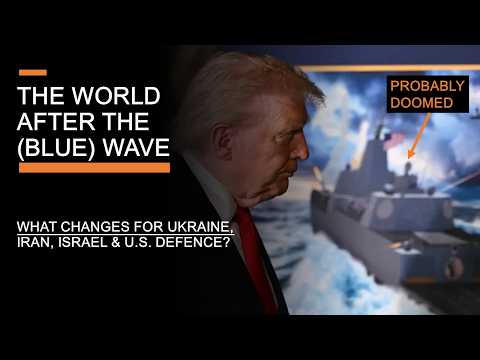
>> Well, I appreciate that, Warren. I appreciate everything you've done. >> So, I wanted to kind of get an update because there's a lot of rumor and innuendo in the wake of the midterms. There have been some changes in the administration, particularly the chief of staff. Democrats have said the first guy they're going to go after once they take their seats in January will be Secretary of Defense Hegs. He's putting on the bold face. He did one of his classic in front of the Department of War signs saying, you know, I'm not going anywhere kind of a thing. Of course, when you talk about Democrats controlling both the House and Senate, the War Powers Act comes into the discussion. Uh so we can imagine that all this is going to affect how we continue with the conflict against Iran
in the near future. So as I said there's a lot of bad information circulating. We wanted to bring you aboard to get the real story on what's happening with shipping. So first couple of questions. Are we seeing an increase or decrease in attacks on shipping through the straight by the IRGC? And is tanker traffic through the
straight increasing or decreasing? What we've seen in October was the most
highest level of attacks since March. So, we definitely saw a massive uptick in the level of attacks being waged. And I will say that even beginning of November, we're seeing it too. It has it has not slacked off because of the midterm. I was talking about the fact that listen our enemies know our political schedule as much as everybody else and so that was definitely an element there but they are not backing off. We are seeing right now according to reports from the joint maritime information center. The US is escorting in out of the straight of horn moves on a daily basis between 15 to 20 ships coming in. Now that's well below the 138 that we saw daily going through the straight of Hormuz back prior to February 28th. What they have established is this shuttle service that is basically running oil largely crude oil out of the straight of Hormuz at levels near pre-war. So we are getting
oil out. Now a couple of caveats with that war. Number one, it's a longer process to get out. Just because you're moving pre-war levels through the straight of Hormuz doesn't mean we're getting pre-war levels out of the Gulf of Oman into the market because that oil largely has to be transferred over to other ships. Uh and also while we're getting oil out, we're not getting other commodities out at that level. Fertilizer, for example, is almost zero coming out. Uh we're not getting ammonia. We're not getting helium necessary for chip production. Uh getting very little diesel fuel out which we really need to replenish stocks around the world. liqufied natural gas, liqufied petroleum gas. But what we are seeing is is attacks. Uh somewhere in the range of 5 to 15% of the ships making the transits are being hit. And there was a number that just came out in a recent report that said out of about of 150 ships that have been attacked, 10 have been severely damaged and or lost.
about another two dou do dozen severely damaged and the rest have been able to continue their voyage. So we are definitely seeing an uptick here by the Iranians. At the same time I want to caveat because you're talking about disinformation. Really important to say a lot of disinformation coming out from the Iranians. Every ship that hit that gets hit, they talk about it hitting a mine. No indication that anyone's hit a mine as of yet. And what we're seeing is a lot of old videos recirculating as new attacks. So, I think the scale of the damage is being magnified by the Iranians, but at the same time, I got to say the Sentcom is is is is really trying to keep this as low-key as they can, but it's not working very well because the the the imagery is getting out. Speaking of SenCom, they they have continued uh sort of surgical strikes and surgical takedowns of tankers that are violating the terms of the blockade just by it looks like it's small diameter bombs against the rudder.
They're not sinking these ships, but just disabling them. But this doesn't rise to the level of epic fury redux, let's say. The president has intimated that after the midterms, maybe we get back to full up kinetic atto tasking
like we did back in in March and April when you, me and Rain were were dealing with this on a nearly daily basis. There are going to be three carrier strike groups in the AO pretty soon. TR just pulled out of Singapore is headed that way to join Bush and GW. Boxer is not in
the Gulf of Oman currently, but nearby kind of near Sri Lanka. When you talk about boots on the ground that could bring bring Marines, that's the expeditionary strike group, the MW. Uh they haven't gone anywhere. So we still have a lot of Navy/Marine Corps power
projection capability in the southern reaches of the area. Air Force has still
a footprint of sorts. So if we had to
ramp it up, we could, but the idea that
that would happen now in the face of this this midterm, let's just call it the blue wave, it looks less and less likely. So if there's going to be any activity like that, probably happened during this lame duck couple of months here. On your last two episodes, which have been really fantastic in terms of the granular detail, you talk about things like the Jones Act, explain to folks what the Jones Act is and how it applies to the current situation in the straight. >> Real quick before I jump into that, uh, you know, the US blockade been very effective. One of the big metrics that we've seen is that the Iranian tankers that are outside the blockade area are basically out of oil. They've delivered all the oil they could. And one of the things that the US blockade has done is cut the ability of Iran to export oil.
And that is having an economic impact on Iran. That fleet, there's a fleet of empty tankers right now sitting off of Sri Lanka, Iranian tankers. And I I think that could be a potential target we should be watching very closely. What does the US do with those ships? Is that some mechanism that they could use to force Iranian hands here? Talked about this a lot. You know, what what do those elements do? We just saw a strike as you mentioned on Huda, which was a foreign flag vessel, a break bulk that went into an Iranian port. It was disabled. You know, at the same time that the Iran is executing their strategy, the US is executing their strategy of the blockade. Domestically, we've got an issue coming up here November 17th where the Jones Act waiver, which has been in effect since March 17th, is going to be up for renewal. And and what the Jones Act is is the provision of the Merchant Marine Act of 1920 that says if you want to move cargo between US ports, you got to be on a US-owned, US flagged, US crude, US-built ship. And the reason for the waiver in March 17th was very simple. It was to try to keep fuel costs down in the US. The hope here was particularly in certain areas that import uh refined product into the United States, largely the West Coast.
West Coast gets a lot of their gas and diesel and jet fuel from East Asia. Because of the disruption of the war, that was going not to be there. And so what we wanted to be able to do was move those products from Texas and the Gulf Coast through the Panama Canal to the West Coast. But there wasn't sufficient US ships to do that. And so you created this Jones Act waiver. The problem with the waiver is that number one, it is Department of Defense that grants the waiver. and they do not have a good oversight of the commercial need. The purpose of the waiver provision was in case of war we can do that so that military bases have fuel not really the commercial market. So that was fixed in the August extension. So now there's a little bit more oversight because there was abuse of the waiver. There were there was uh lifts being done without it being reported. There was a lot I mean there's a lot of times that ships were giving waivers when there were US ships available. I think there should be a big debate, big question about do we need to waiver to go on to maintain supply but more importantly I think this is a perfect time for a discussion about do we need more US tankers for example in the commercial fleet we've talked about this that maintaining three carrier strike groups an amphibious ready group and you know a dozen Burke class destroyers in the Indian Ocean is requiring a shipload of tankers to do that and you know we're we're pulling a lot of tankers to do that. Not just military sealiff command oilers but commercial tankers. Same time I would argue there is a demand signal that we probably need more coastal tankers to do this. And what I hope to see is a discussion on that. I I think you're right. I I think this lame duck period is going to be a very interesting thing.
What do we see push through? The problem you have is that the two big advocates for the Jones Act waiver is is is Kevin Hasset, who's the president's economic adviser, and Stephen Miller, who is now the new chief of staff. Do we see an extension of that waiver? Potentially, yes. And I think if it goes for a full year into March, that's going to create a lot of problems for the domestic trade. And that raises questions about do we keep a US domestic trade? because if that goes, that's going to impact shipyards, repair facilities, which in turn impacts the US military's ability to maintain itself.
>> Another term you've used in a recent episode is make sure I'm pronouncing this right, deur demurrage. What is that? >> So, demurrage is is a really interesting uh element here. This is has to deal with cargo handling. Whenever uh a ship is is is not allowed to either offload or or it's late because of cargo, then there's a fee that has to be paid for that. So, there are two there kind of twos, detent detention and demmerge. So, the issue came up. There was a great piece by Greg Miller over in Lloyd's list that looked at uh some testimony in a case in London and what he was able to piece together and I did in a video was talking about the early charters of how you get tankers in and out of the Persian Gulf. was really eye opening and and and kind of a you know kind of behind the scenes a really kind of in-depth look and one of the things he was looking at was this energy corporation that was contracting with ships to get oil out of the Persian Gulf early in the war in March April time frame and they made this very interesting contract with shipping companies that if they couldn't get the oil out of out of the Persian Gulf then they would charge uh this demerge fee which is basically a holding fee. you're you you're basically keeping my ship afloat as a as a storage tank. But what they did is they had a decreasing amount of demmerge they paid. So it became very beneficial for the charterer, the person whose oil it is just to hold it in the ship. It became less costly. If you were the ship owner, it was a problem because you weren't making money. And what this did was kind of force some of the shipping companies, especially those shipping companies that are owned by some of the countries in the area. So for example, the UAE, the Emirates owns a company called ADNO, the Abu Dhabi National Oil Company. Adnoch basically in conjunction with Sentcom and Fifth Fleet established a shuttle service where their ships would would load oil, carry it through the straight of Hormuz out to the Gulf of Oman and then transfer it to other vessels and they would get protection from the US uh aircraft uh fixed wing and and rotor and also drones. And this started the shuttle service we saw take off in about uh starting in April but really magnified when theou the memorandum of understanding broke down between the US and Iran and that's the process that we're seeing. The other element you have here is several commercial firms one of them a company called Sicore which prior to the war had some either brilliant insight or some inside information to corner the market in very large crude carriers. And so they bought if you had a very large crude carrier, they're going to buy it from you. And now they are running ships out of the Persian Gulf, both in a shuttle service and direct service. They're bringing fuel from the Persian Gulf to China, for example. And the rates they're getting is insane. Ward, I mean, you know, pre-war you were getting $50 to $100,000 per day for a ship. They're getting $1.5 million a day for a ship. you know, 22-day voyage, you're basically making, you know, what what was, you know, a year, you know, a 22-day voyage, you're making that in a day or two of your first voyage going to East Asia. So, it's just that they're printing money right now, the oil companies. It's why you see oil and gasoline and and diesel so expensive. It usually costs to move oil by sea, you know, $4 of that barrel is movement by sea. Now, it's $40. So, it's 10 times as much to move oil on the ocean. So, are we seeing the adno tankers getting targeted by the IRGC as a result of their involvement here?
>> In some ways, you have to love the Iranians because the Iranians are trying to standardize passage through the straits. So, they created this entity called the Persian Gulf Strait Authority, which is run by the IRGC, the Islamic Revolutionary Guard Corps, and they're trying to become a deacto kind of toll booth through there. and they have a list of banned vessels and it's the it's the who's who of who's on this service because the Sencom won't release it but you can get it from the the Iranians and what when you go down that list it's it's ADNO it's it's the Kuwaiti oil company it's Bari which is the Saudi Arabian oil company so I mean you can tell who's doing this shuttle service is literally it's it's a wanted list by the Iranians and you see them targeting those ships >> so how does this net out in the next couple of weeks months in terms of the price of oil. You already mentioned that fertilizer isn't moving. So, we can imagine that hits American markets and farmers that, you know, this has been an issue that you flagged a long time ago, by the way. Uh something that people weren't thinking about while people are talking about the price of gas. But the claim that shipping is pre-war levels is speaking to the adno part. That's not
untrue. Uh but is this going to be steady state to the degree that diesel prices are going to come down and global prices will stabilize to where the issue can be resolved? >> You got a couple of things. Number one, oil prices react to what is happening in the news. So when you see oil all of a sudden drop that had a lot to do with the midterm. So that you know because of that issue we saw oil drop. The the fundamental issue is this Ward is during that period from March to June, we created this kind of donnut hole in the shipment of oil. Oil wasn't coming out in large quantities and and what that means is when you look at global supply both ashore and a float, it's at the lowest level we've seen and that creates the problem. Now, you know, we've had a couple of upticks with that where we've gotten oil back, but now in October into November, we've had these renewed strikes against ships and that's starting to curtail some shipments coming out. We're not quite at the levels we were back in, for example, August and September. And what we're seeing is we can't get the global supply back up to where it needs to be, which which isn't a problem, but the problem becomes if there's another shock to the system. There's not a lot of, you know, there's not a lot of safety in it right now. And so, this becomes a big issue.
Uh, China, for example, reopened up its its its refineries, its facilities. So, it's draining oil from the global market once again. uh that's creating a pull a demand on it. Uh well, why we're seeing gas and diesel so high in the US because our gas and diesel is sought after overseas and you're seeing in a lot of countries around the world where you're seeing both high prices and shortages. We have the high prices. We, you know, we have one element of the 1973 oil crisis. We got the high prices. We don't have the lines because we produce and we can basically generate a lot of our own sources now. Something we couldn't do in the 70s. A lot of countries don't and this is what's creating the problem. So you go to countries like the Philippines, uh you know uh Australia, Australia has big problems with this where they're short on oil and refined products. It is creating a major problem. And the issue is the Iranians are pushing this lever very hard right now. They know that they are making an impact right now. The the the oil companies are running ships out. They're sucking up the damage and they're sending their ships in the repair facilities and they keep going. The problem is a 5 to 15% hit rate on ships coming through. You're going to start to wear out. And a matter of fact, we just saw the first indication of that ward because the oil companies are petitioning some of the the countries that are sanctioning tankers, the dark fleet tankers. These are the tankers that are moving Russian and illegal oil to be able to bring some of those ships back into regular service. they have to remove the sanctions from them because that tells me that they're running out of tankers that this is we're starting to see that kind of attrition level in it. So much like when we talk about the problem the US Navy has with maintaining forward presence and the grind and attrition, we're seeing that right now in an attritional level of ships coming through the Persian Gulf. So, speaking of Navy presence, I think what we're going to see in the near term is, like we said earlier in this episode, three carrier strike groups on the scene. TR is moving as a reaction to the National Command Authority idea that there would be a return to Kinetic
working through an ATO kind of thing. Not epic fury level, but steady state strikes. I don't think that's how we're going to be, particularly once the new Congress is seated. Uh, and we'll see what they do in terms of a War Powers Act enforcement. And speaking of the War
Powers Act, if you look at the fine print, it's like, well, what determines hostilities? Because there's been starts and stops. So, with a straight face, the Pentagon could say, okay, start the clock because we haven't been doing anything. So, let's start 90 days like now. you know, there's a way you can game it where it's not like effective immediately. There's no more strikes against Iran. So, we'll see how that goes. But in any case, the Navy has kind
of prepared for the idea that the we're going to have presence here in perpetuity, but it's probably not three carrier strike groups. The other thing they're attending to, and we've seen this with GW pulling into port and TR hitting a port on the way uh there is
the quality of life issues that affected Lincoln. Now, Lincoln was the confluence of a bunch of factors, uh, including the, you know, the opening of Epic Fury that kneecapped our logistics hookup, which we detailed very granularly months
ago, and you've done the same on your channel, and your expertise here was fundamental in us getting that right. So, I think we've got our hands around that. As you said, we always need more support ships on station and we'll see if we attend to that. But the other thing that in terms of the optempo in theater, it's feeling to me like what happened during my career. So whether it's Libya or what we did after we
stopped bombing Sievo in the Adriatic or particularly Southern Watch, the patrolling of the no-fly zone over southern Iraq for years and years. It's like 10 sorties just drilling holes in the sky punctuated by one where you actually drop something or you get spiked by an Iraqi SAM site and you get to respond. That's kind of what I think we're going to do for the indefinite future, right? Where we'll be there, we'll do the blockade. As you as you've said, the blockade has been very effective. It's something we know how to do. That's a fundamental skill set for your US Navy. So, we can do that. That's not over and above what we expect we
would do. So, it's not going to tax the fleet unduly like the dropping of ordinance, especially using exquisite weapons, drawing down on those stocks. So, that's probably not a problem. Again, punctuate with port calls, keep keep the sailors happy and and give them what they were promised by the recruiter, of course. So, we can maintain that kind of thing. and how this what this does ultimately to the price of oil is as you said it it it it's going to fluctuate and whatever the political whims are you know again midterm yielded what it did because of the price of diesel you could say that's what the pundits are kind of saying is one of the main takeaways uh so certainly there's some time now before that becomes an issue that's of consequence certainly Americans are going to be you know complain dayto day about the price of oil but politician icians won't react now because we're not like on the verge of an election cycle for a few months now. But nobody likes
to have these ongoing wars happening. So there will always be pressure and now the Dems arrive with this sort of mandate which is stop the war, quality of life issues, etc., etc. So we'll see what that yields in terms of how we react uh in the Gulf. The president seems unrepentant here. So, I think as long as he's commander-in-chief, he's going to do kind of what he wants. We'll see if if HGS winds up being a sacrificial lamb or what. Again, so far he doesn't seem like he's interested in resigning. We'll see if Trump fires him and then an impeachment is a whole different thing. Um, which uh we'll see how that would go. Obviously, during the Trump 45 years, that was a bit messy and ineffective trying to impeach the president. So, in any case, keep our eyes on the situation. S, you're a super busy man. Um, so thank you for the time today and we look forward to having you on the channel again soon.
>> Ward, I appreciate it and thank you for having me on. >> All right, that'll do it for this episode. If you're not already a subscriber, become one so you don't miss anything. And we'll continue to produce episodes here from our headquarters now in Florida. As you guys may have seen, my father passed away a couple days ago, so I'm the executive of the estate. So I'll be down here for a little while taking care of all of those matters. Thank everybody for the condolences on the channel, but in the meantime, I look forward to talking to you again very soon.
[music]
[music]
>> [music]